Automatically append previous messages to maintain multi-turn context. May increase token usage.
How can I help you today?
README
Complete guide to using claude-sonnet-5
Claude Sonnet 5 API for Autonomous Agents and Complex Code Synthesis
Access the Claude Sonnet 5 model via Kie.ai, featuring native computer use, granular effort levels, and self-verifying task execution.
Technical Capabilities of the Claude Sonnet 5 API
Autonomous Agentic Intelligence & Multi-Step Task Execution
The Claude Sonnet 5 API introduces advanced agentic capabilities, enabling autonomous workflows to formulate strategic plans, navigate complex environments, and complete multi-step tasks independently. Compared to legacy iterations, this interface demonstrates a major performance leap in core reasoning, multi-tool utilization, and professional knowledge processing. It functions with high autonomy by evaluating its own outputs and performing self-corrections without requiring explicit prompt instructions, making it a reliable backbone for production-grade enterprise automation.
Near-Opus Performance with Effort-Level Cost Management
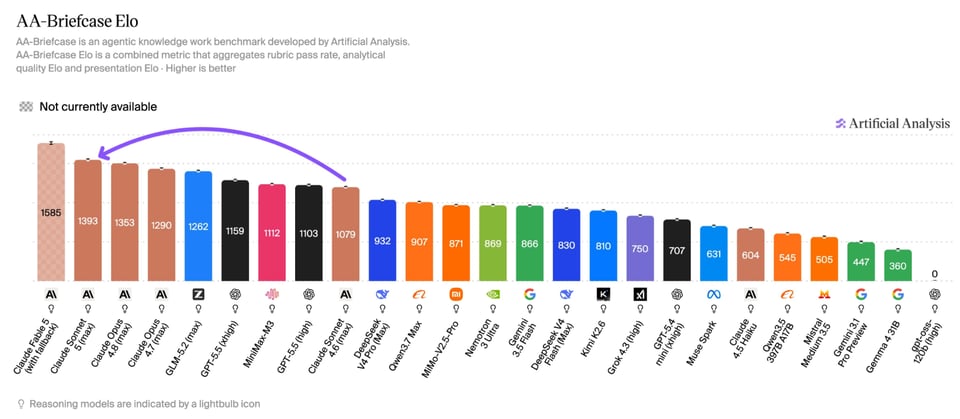
The Claude Sonnet 5 API successfully bridges the performance gap between the Sonnet and Opus tiers, offering intelligence near the Opus 4.8 class while maintaining a competitive pricing model. To optimize infrastructure expenses, the Claude Sonnet 5 API provides granular effort levels that allow engineering teams to dynamically balance API cost and reasoning accuracy based on specific task demands. This budget-focused flexibility ensures that developers can scale high-volume workflows effectively without facing unpredictable cost spikes.
Advanced Code Synthesis & Native Computer Use
Engineered to streamline complex engineering lifecycles, the Claude Sonnet 5 API excels at code generation, system maintenance, and debugging across multi-file codebases with minimal iteration. Beyond software development, its native computer use capabilities and advanced browser navigation allow it to interact with digital interfaces via terminal commands and web environments. This convergence of deep coding logic and precise interface manipulation empowers teams to completely automate specialized workflows that previously mandated manual execution.
Enhanced Enterprise Safety & Robust Risk Mitigation
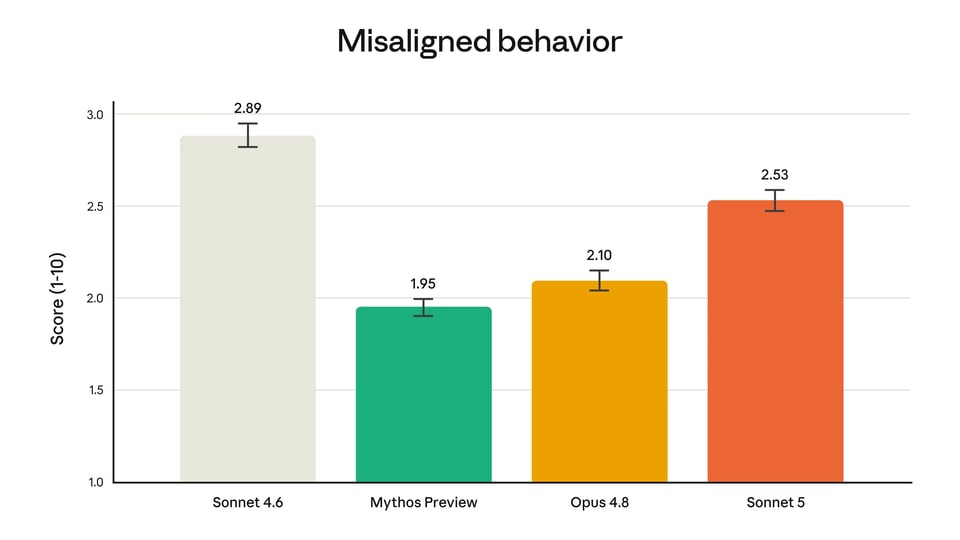
Claude Sonnet 5 API features significantly lower refusal and harmful behavior rates than earlier iterations. The infrastructure provides built-in resistance against prompt injection attacks, reduces sycophancy, and minimizes hallucination rates to guarantee highly deterministic, predictable outputs. Furthermore, it incorporates default cybersecurity guardrails that actively monitor, detect, and intercept hazardous network operations during real-time computer use tasks.
Claude Sonnet 5 API Benchmarks and Performance Evaluations
Experience the next generation of content creation tools.
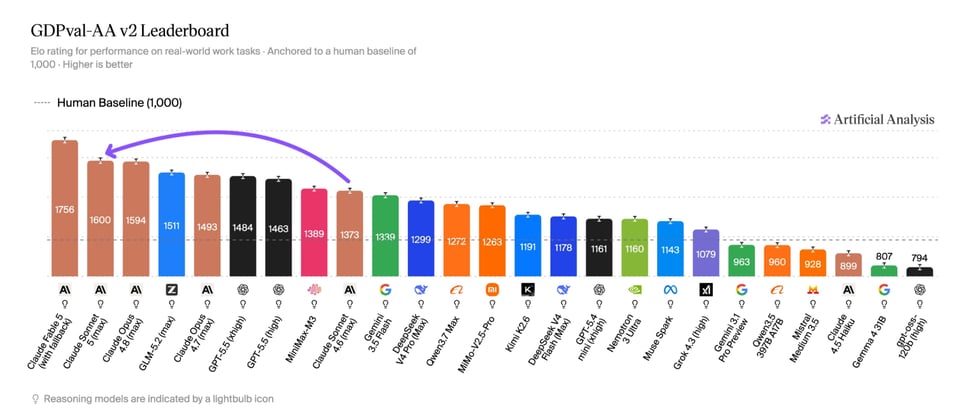
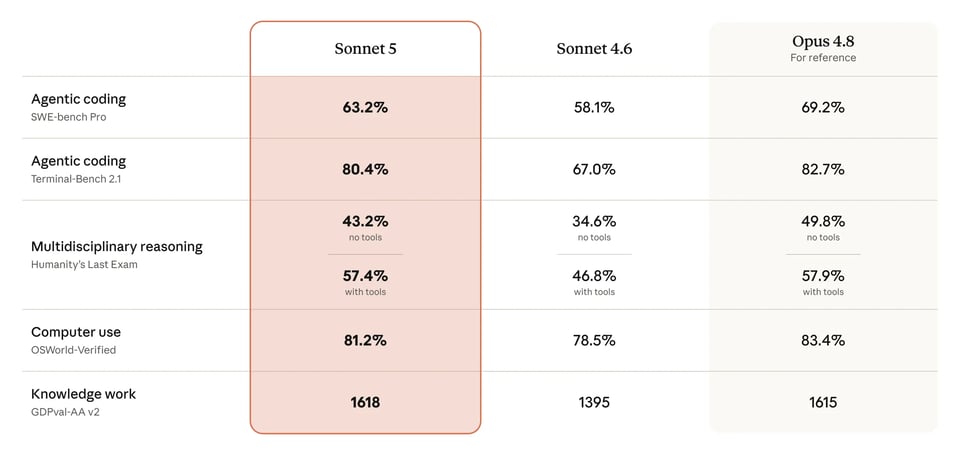
The Claude Sonnet 5 API establishes a new baseline for frontier intelligence by demonstrating a major generation-over-generation performance leap. The Claude Sonnet 5 model scores 63.2% on SWE-bench Pro and 80.4% on Terminal-Bench 2.1, showcasing advanced capability in agentic coding environments. It further validates its multi-turn operational robustness with an 81.2% pass rate on the OSWorld-Verified benchmark for computer use. In knowledge-intensive domains, the model scores 1618 on the GDPval-AA v2 benchmark, and achieves 57.4% on Humanity's Last Exam when integrated with tools, establishing itself as a highly reliable, near-Opus class interface for production workloads.
Agentic Search Performance and Cost-Performance Curve Optimization
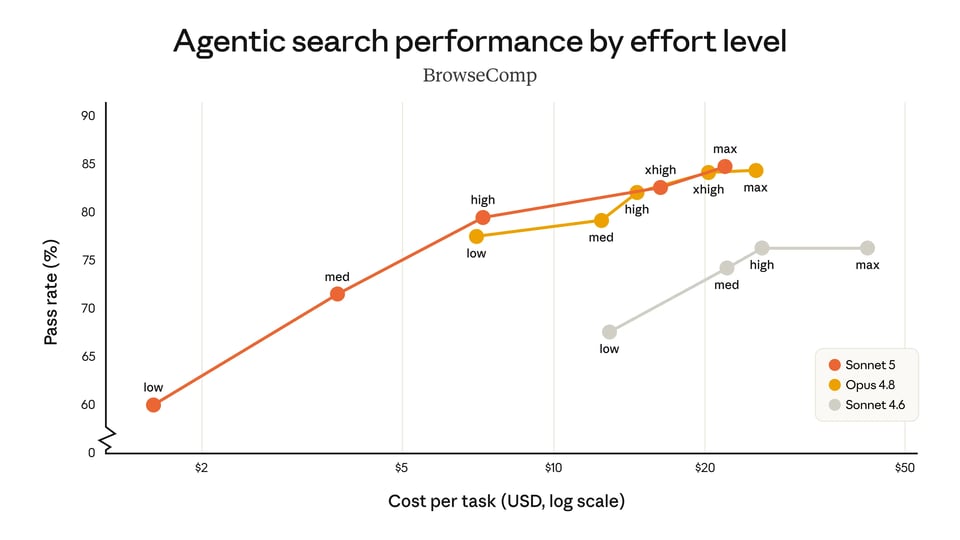
The Claude Sonnet 5 API introduces an optimized cost-performance architecture that allows engineering teams to scale operational efficiency dynamically. As the BrowseComp benchmark evaluations, the Claude Sonnet 5 model offers a flexible range of cost-performance options mapped directly to different computational effort levels. The task pass rate scales predictably from 60% at the "low" effort setting up to a peak of 85% at the "max" effort tier, consistently delivering high-throughput agentic search capabilities that match or exceed legacy frontier models like Opus 4.8. This granular control ensures developers can execute complex, multi-step agent workflows with predictable infrastructure budgeting and optimal cost-to-performance scaling.
Model Comparison: Claude Sonnet 5 vs Sonnet 4.6 vs Opus 4.8
| Category | Claude Sonnet 5 | Claude Sonnet 4.6 | Claude Opus 4.8 |
|---|---|---|---|
| Positioning | Strongest Agentic Mid-tier Model | Previous Generation Sonnet | Current Flagship Opus Model |
| Context Window | 1M tokens | 1M tokens | 1M tokens |
| Agentic Capabilities | ★★★★★ (Best) | ★★★★ | ★★★★★ |
| Agentic Coding (SWE-bench Pro) | 63.20% | 58.10% | 69.20% |
| Agentic Coding (Terminal-Bench) | 80.40% | 67.00% | 82.70% |
| Computer Use (OSWorld-Verified) | 81.20% | 78.50% | 83.40% |
| Multidisciplinary Reasoning (Humanity's Last Exam) | 43.2% (no tools) / 57.4% (with tools) | 34.6% / 46.8% | 49.8% / 57.9% |
| Knowledge Work (GDPval-AA) | 1618 | 1395 | 1615 |
| Adaptive Thinking | Enabled by Default | Supported | Supported |
| Safety | Significantly improved, default cyber safeguards | Good | Highest |
| Cost-Performance | ★★★★★ (Best) | ★★★★ | ★★★ |
| Recommended Use Cases | Agent Building, Large-scale Coding, Enterprise Automation | General Tasks | Extremely Complex Deep Reasoning |
How to Deploy the Claude Sonnet 5 API on Kie.ai
Secure Your Authentic Claude Sonnet 5 API Key
Formulate and Transmit the Claude API Interface Request
Configure Parameters and Process Response Payloads
Why Access Claude Sonnet 5 API via Kie.ai
Clean and Streamlined Claude Sonnet 5 API Interface Documentation
Kie.ai provides a comprehensive, production-oriented API interface documentation catalog designed to minimize migration friction and accelerate developer lifecycles. Technical teams gain immediate access to standardized parameters, exhaustive field descriptions, and structured response formats.
Multi-Version Compatibility: Claude Sonnet 5 API and Legacy Editions
The Kie.ai repository extends far beyond the newly deployed Claude Sonnet 5 API to include older generations and classic model versions. This comprehensive archive ensures full backward compatibility for automated workflows, allowing teams to maintain stable connections without forcing code modifications.
Secure API Management and Usage Monitoring
Security is strictly enforced through IP whitelisting and customizable safe-spend limits to prevent unauthorized endpoint access. A real-time logs and API interface dashboard provides full operational visibility into task IDs and token credits consumed, ensuring total auditability of all Claude Sonnet 5 API expenditures.
High-Stability Infrastructure Optimized for High-Concurrency Applications
The architecture of the Claude 4.5 Sonnet API is engineered to guarantee highly deterministic and stable task execution across demanding production environments. This underlying system maintains a resilient response velocity while consistently delivering a 99.9% uptime reliability benchmark for parallel automation flows.