Text prompts for video generation. Supports both Chinese and English, with a minimum of 2 characters and a maximum of 5,000 characters.
0/5000Click to upload or drag and drop
Supported formats: MP4, QUICKTIME, X-MATROSKA Maximum file size: 10MB; Maximum files: 3
The URL of the image used to generate video
The duration of the generated video in seconds
Video resolution tier
The multi shots parameter controls the shot composition style during AI video generation, determining whether the generated video is a single continuous shot or multiple shots with transitions.
A configurable parameter. Defaults to true in the Playground.
Explore different use cases and parameter configurations
Text prompts for video generation. Supports both Chinese and English, with a minimum of 2 characters and a maximum of 5,000 characters.
0/5000Click to upload or drag and drop
Supported formats: JPEG, PNG, WEBP Maximum file size: 10MB; Maximum files: 1
A list of image URLs. All images must be at least 256x256px.
The duration of the generated video in seconds
Video resolution tier
The multi shots parameter controls the shot composition style during AI video generation, determining whether the generated video is a single continuous shot or multiple shots with transitions.
A configurable parameter. Defaults to true in the Playground.
Explore different use cases and parameter configurations
Text prompts for video generation. Supports both Chinese and English, with a minimum of 1 characters and a maximum of 5,000 characters.
0/5000The duration of the generated video in seconds
Video resolution tier
The multi shots parameter controls the shot composition style during AI video generation, determining whether the generated video is a single continuous shot or multiple shots with transitions.
A configurable parameter. Defaults to true in the Playground.
Explore different use cases and parameter configurations
README
Complete guide to using wan/2-6-video-to-video
Affordable Wan 2.6 API for Cinematic Multi-Shot Video Generation
Cinematic multi-shot video generation at an affordable price—featuring rich backgrounds, stable characters, and synchronized native audio, powered by Alibaba’s Wan 2.6 API.
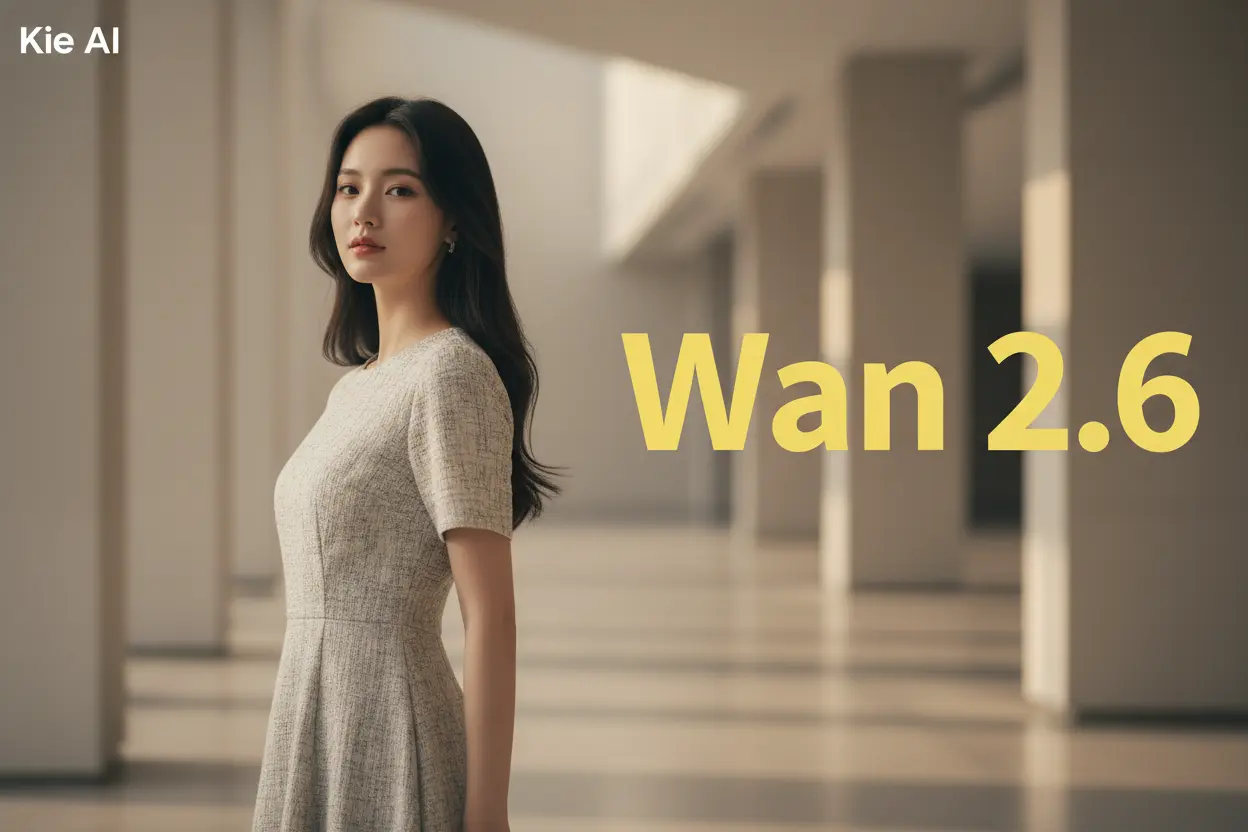
Introducing Wan 2.6 API: A New Generation of AI Video Creation from Wan AI
Developed by Wan AI within the Alibaba ecosystem, Wan 2.6 is the latest generation of Wan’s AI video model, focused on turning short prompts and visual inputs into coherent, multi-shot video stories. Version 2.6 introduces stronger scene continuity, more stable characters, and improved control over camera movement and pacing, making generated videos feel deliberate rather than fragmented.Built on top of the Wan 2.6 model, Wan 2.6 API makes these capabilities available for real-world products and workflows. It allows developers to generate videos from text, images, or reference videos, supporting Text-to-Video, Image-to-Video, and Reference-to-Video creation with up to 15-second HD output, native audio, and accurate lip sync for commercial use.
Video Generation Modes in Wan 2.6 API on Kie.ai
Wan 2.6 T2V API (Text To Video)
Wan 2.6 T2V API generates cinematic videos directly from natural language. Wan 2.6 understands multi-shot prompts and storyboard-style descriptions, translating shot order, camera direction, pacing, and mood into a coherent video sequence rather than a single isolated clip. This mode is well suited for scripts, briefs, and structured scene descriptions.
Wan 2.6 I2V API (Image To Video)
Wan 2.6 I2V API animates a single image into motion while preserving subject identity and visual style. Wan 2.6 maintains facial features, proportions, textures, and overall composition, making it suitable for portraits, product images, illustrations, and other static visuals that need to be extended into short-form video.
Wan 2.6 R2V API (Reference to Video)
Wan 2.6 Reference to Video API allows you to use an uploaded reference video to guide the generation of new scenes. Wan 2.6 extracts key visual characteristics—such as appearance, style, and voice—from the reference and applies them consistently to newly generated videos, enabling character continuity across shots and related content.
What’s New in Wan 2.6 API for AI Video Generation
Multi-Shot Storytelling with Cinematic Precision using Wan 2.6 API
The Wan 2.6 API introduces a re-engineered storytelling engine that generates multi-shot, 1080p videos with smooth transitions, balanced pacing, and natural camera movement. It understands storyboard-style prompts and scene descriptions, allowing developers to create connected visual narratives from text or image inputs. This makes the Wan 2.6 AI Video Generation API ideal for cinematic storytelling and short-form creative production.
Reference-Based Generation for Stable Identity and Voice via the Wan Video API
The latest Wan 2.6 API adds a powerful reference-based generation system that extracts appearance, motion style, and voice characteristics from a reference clip. The Wan Video API then applies these attributes consistently to new scenes, maintaining character and style continuity throughout the entire video. This upgrade enables character-driven storytelling and brand-consistent AI-generated videos that look realistic and professionally produced.
Extended Duration and Enhanced Temporal Stability supported by the Wan 2.6 AI Video Generation API
Wan 2.6 API extends video length to up to 15 seconds while maintaining HD clarity and frame-to-frame consistency. Improved temporal attention keeps lighting, outfit, and environmental details stable throughout motion. This longer, smoother output gives developers more flexibility to build richer narratives for commercial-grade AI video generation projects.
Integrated Audio for Realistic HD Output enabled by the AI Video Generation API
The Wan 2.6 AI Video Generation API combines native audio creation and advanced camera physics in one workflow. It produces synchronized dialogue, background music, and ambient sound with precise lip sync while executing realistic pans, zooms, and tracking shots. The result is a fully cinematic HD AI video creation experience—high-fidelity, ready-to-publish output directly from Wan 2.6 API.
How Wan 2.6 Compares to Other AI Video Models
As AI video generation continues to evolve, Wan 2.6 stands alongside several major models that each bring their own approach to duration, audio, motion, and scene control. The comparison below places Wan 2.6 next to Wan 2.5, Sora 2, Veo 3.1, and Kling 2.6, offering a clear view of their publicly available capabilities so developers and creators can understand how these systems differ and where each model fits within modern video workflows.
| Feature | Wan 2.6 | Wan 2.5 | Sora 2 | Veo 3.1 | Kling 2.6 |
|---|---|---|---|---|---|
| Input Types | Text, Image, Video Reference | Text, Image | Text, Image | Text, Image | Text, Image |
| Typical Output Duration | Up to ~15 seconds | ~8–10 seconds | Up to ~25 seconds | 8 seconds, supports extended durations | ~3–10 seconds |
| Resolution | 1080p | 1080p | 1080p | 1080p | 1080p |
| Audio Generation | Yes, native audio with lip-sync | Yes, supports audio generation | Yes, integrated audio | Yes, integrated audio | Yes, native audio and speech |
| Multi-Shot / Scene Control | Yes, supports multi-scene prompts | Limited | Supports complex scene structures | Supports multi-prompt sequencing | Limited multi-scene ability |
| Character Consistency | Strong multi-shot consistency | Moderate | Strong character continuity | Stable character continuity | Stable appearance and motion |
| Camera Motion Control | Natural cinematic motion | Limited | Advanced camera motion | Cinematic camera transitions | Realistic, physics-aware camera motion |
| Primary Focus | Cinematic narratives and reference-driven outputs | Core capabilities for short videos | Realistic sequences with strong coherence | Controlled cinematic sequences | High-fidelity motion with synchronized audio |
How to Use the Wan 2.6 API on Kie.ai
Create an Account and Retrieve Your Wan 2.6 API Key
Explore the Wan Video API in the Playground
Configure Your Environment for API Integration
Submit Your First Wan 2.6 Generation Request
Incorporate Wan 2.6 into Your Production Workflow
See What You Can Build with the Wan 2.6 Video API
Surreal Cinematic Animation with the Wan 2.6 Video API
The Wan 2.6 Video API enables creators and developers to build expressive cinematic sequences that transition smoothly across environments, perspectives, and lighting conditions. Ideal for creative storytelling and visual experimentation, the API preserves stable textures, reflective materials, and multi-shot continuity—supporting artistic short films, campaign visuals, and stylized narrative content.
Hyperreal ASMR Macro Content Using the Wan 2.6 API
For tactile, sensory-driven visuals, the Wan 2.6 API generates hyper-detailed macro scenes with precise micro-reflections, consistent depth of field, and controlled pacing. This use case fits ASMR creators, product-detail content, food close-ups, and any scenario requiring crisp, intimate textures powered by advanced AI video generation.
Commercial Product Reveal and Branding with the Wan Video API
The Wan Video API offers reliable lighting control, clean contours, and polished camera transitions—ideal for product unveilings, branded assets, and commercial motion content. From metallic surfaces to engineered objects, the system reproduces modern product aesthetics with clarity, making it a strong fit for e-commerce, marketing teams, and industrial designers.
Atmospheric Sci-Fi Worldbuilding via the Wan 2.6 Video API
Teams producing narrative, game, or film concepts can use the Wan 2.6 Video API to develop atmospheric sci-fi sequences with large-scale environments, drifting particles, and dramatic cinematic lighting. The model maintains structural coherence across both wide planetary shots and interior scenes, enabling immersive worldbuilding and high-concept storytelling.
Why Choose Kie.ai for AI Video Generation with Wan 2.6 API
Affordable Wan 2.6 API Pricing
Kie.ai provides cost-effective access to the Wan 2.6 API, making high-quality video generation accessible for both experimentation and large-scale workflows. Whether using text-to-video, image-to-video, or reference-driven generation, the platform keeps pricing predictable and suitable for continuous production needs.
Free Wan Video API Testing in the Playground
Before integrating the API, you can explore Wan 2.6 directly in the Kie.ai Playground at no cost. This allows you to test multi-shot sequences, 1080p outputs, and native audio generation while experimenting with duration, structure, and visual style—ensuring you understand model behavior before deployment.
Comprehensive Wan 2.6 API Documentation
Kie.ai offers complete documentation for all Wan 2.6 API endpoints. From obtaining your API key to crafting generation requests, each guide includes clear examples, parameter explanations, and integration guidance designed to help teams adopt the Wan Video API quickly and confidently.
Developer-Friendly Tools and Continuous Technical Support
With REST endpoints, SDK options, structured request schemas, and organized task management utilities, Kie.ai simplifies the entire development and deployment process for the Wan 2.6 API. To support ongoing integration and production use, the platform also provides reliable 24/7 technical assistance, ensuring developers can resolve issues and maintain smooth workflows at any time.