README

GPT-6.2 Sol API for Everyday Coding and Multistep Agentic Workflows

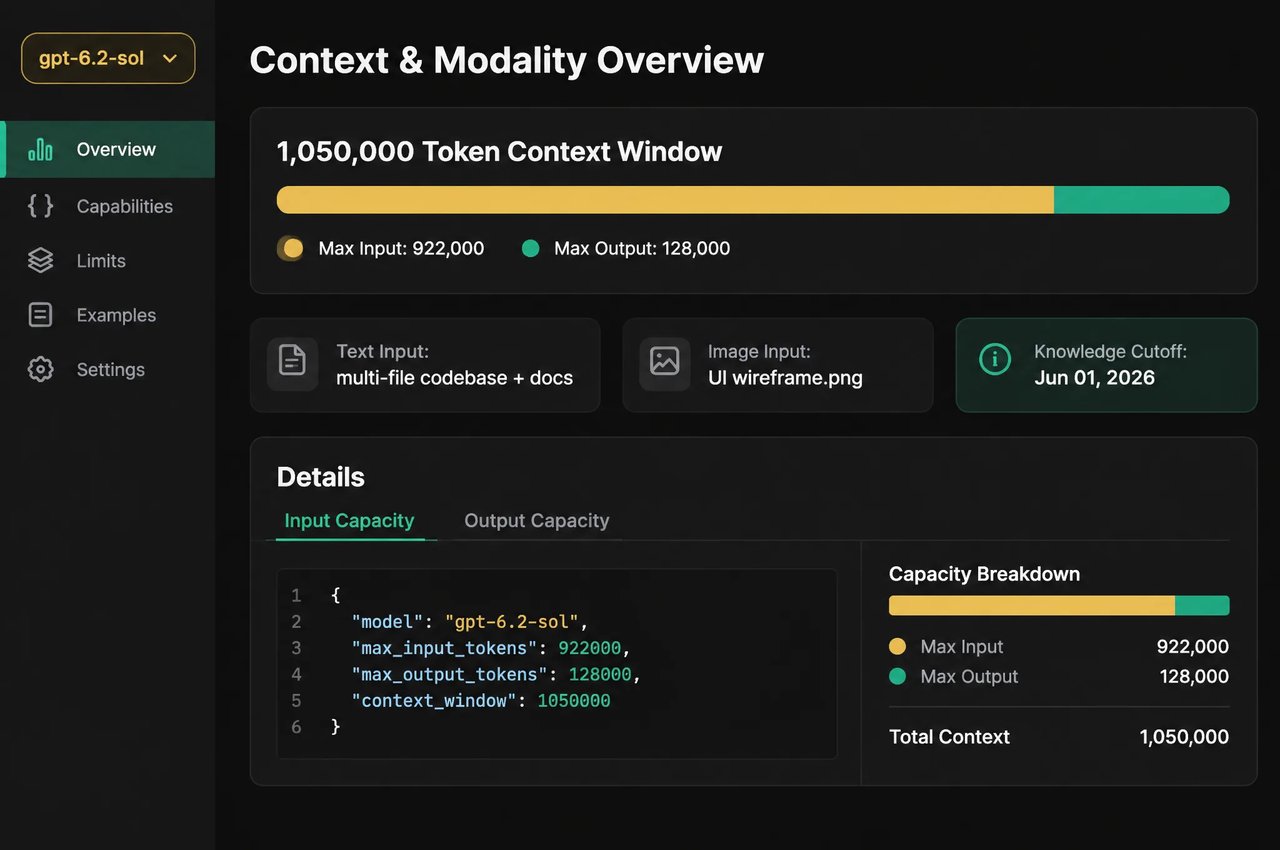
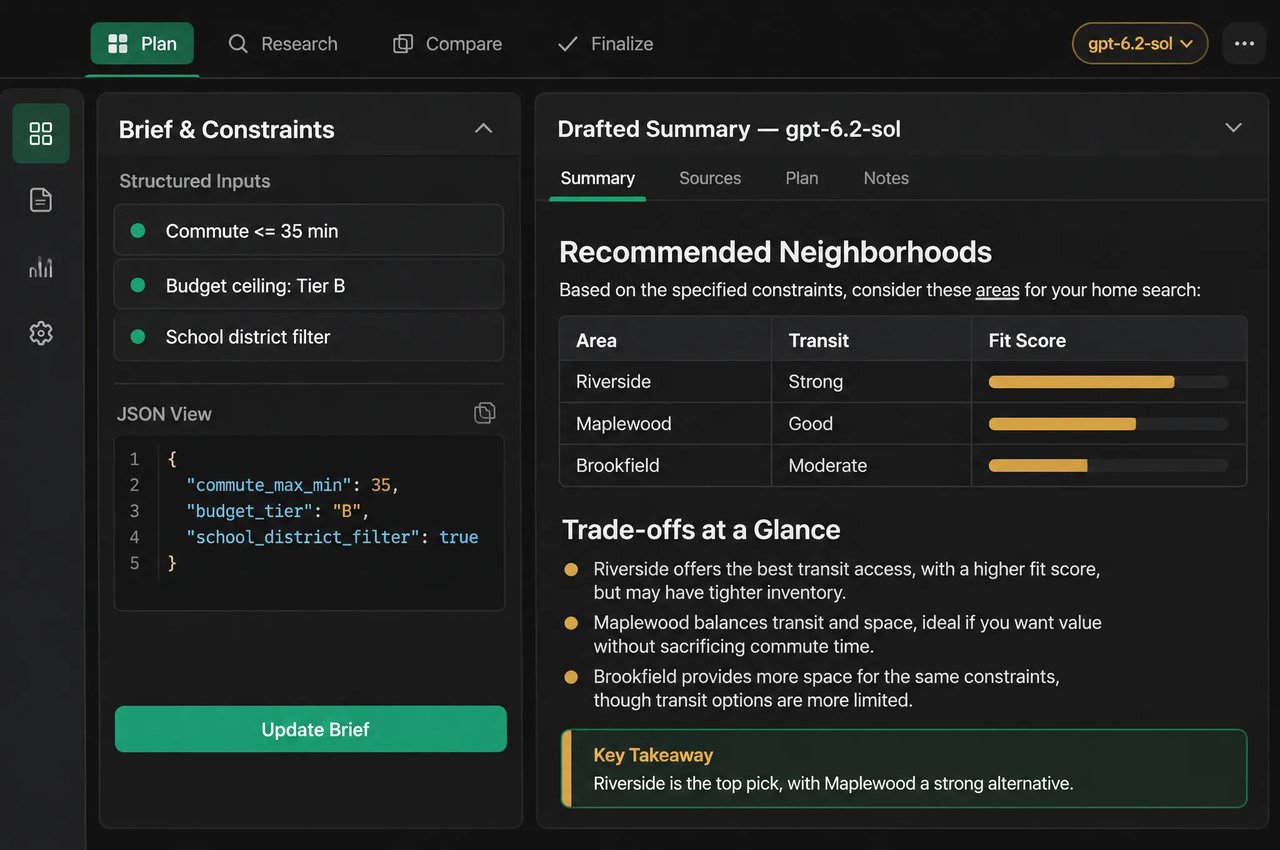
GPT-6.2 Sol accepts text and images and produces text across a 1,050,000-token context window, with up to 922,000 input tokens, 128,000 output tokens and a June 1, 2026 knowledge cutoff. OpenAI recommends starting with GPT-6.2 Sol for day-to-day coding and everyday technical or non-technical work.
GPT-6.2 Sol API for Everyday Coding and Multistep Agentic Workflows

Key Capabilities of GPT-6.2 Sol

OpenAI describes GPT-6.2 Sol as smarter and more efficient than GPT-6.1 Sol, serving as a default model across technical and non-technical workflows.
Within 0.5 Points of GPT-6.2 Astra on FrontierCode 2.0
01

Within 0.5 Points of GPT-6.2 Astra on FrontierCode 2.0

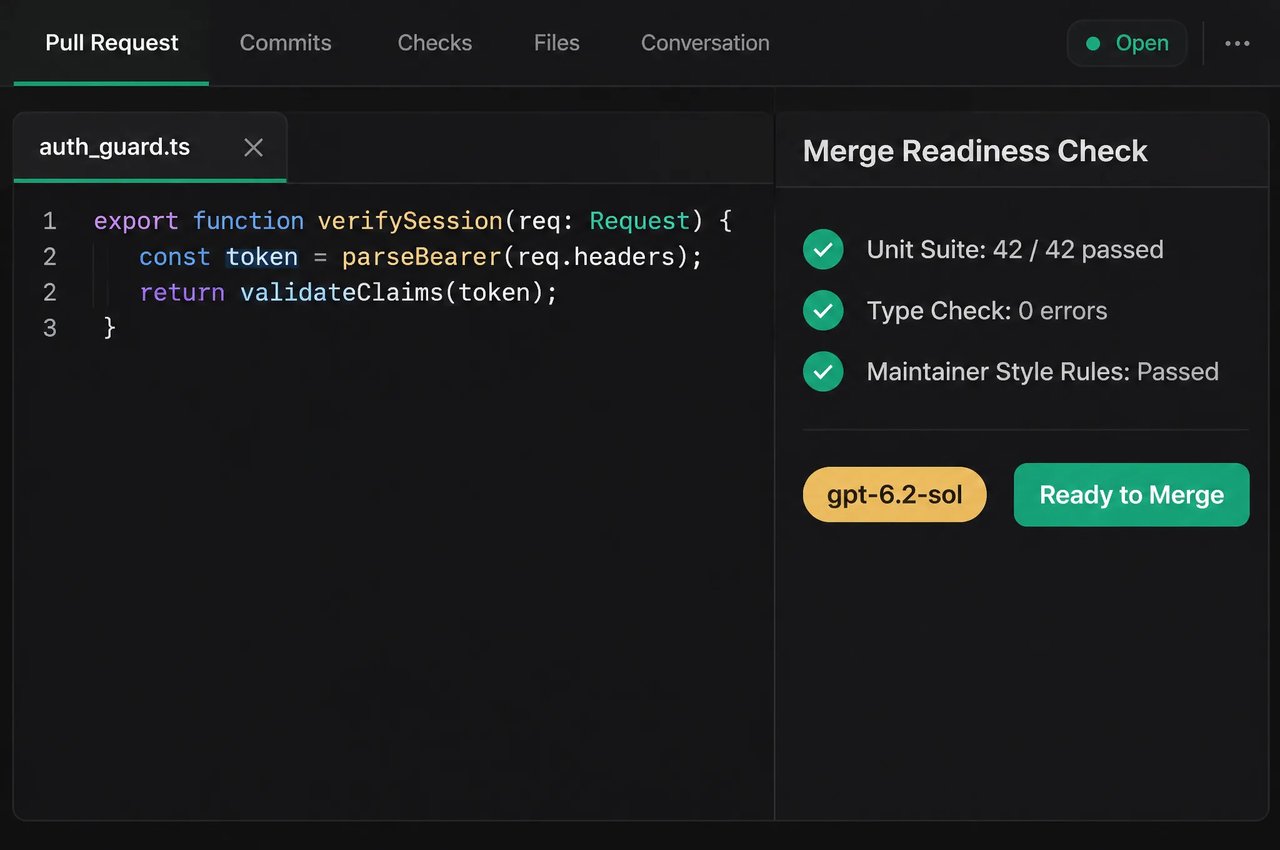
OpenAI recommends starting with GPT-6.2 Sol for day-to-day coding. On Cognition's FrontierCode 2.0, which evaluates whether changes to real codebases meet maintainers' merge standards, GPT-6.2 Sol comes within 0.5 points of GPT-6.2 Astra when both run at max reasoning.
Multistep Agentic Workflows and Tool Calling
02

Multistep Agentic Workflows and Tool Calling

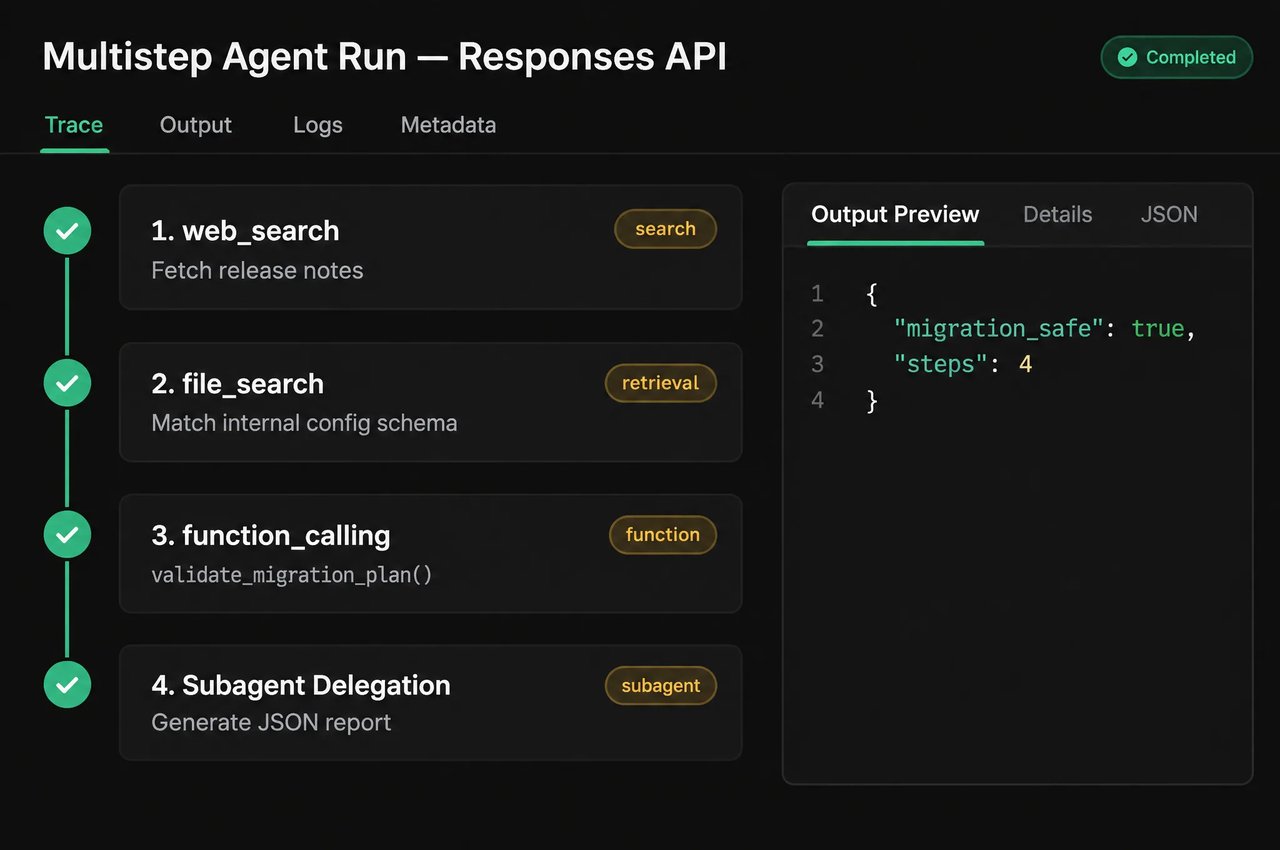
GPT-6.2 Sol powers through multistep agentic workflows. Through the OpenAI Responses API, it calls tools such as web search, file search and subagent delegation via the Multi-agent beta, and supports function calling and structured outputs.
1,050,000-Token Context and June 2026 Cutoff
03

1,050,000-Token Context and June 2026 Cutoff

Each request supports a 1,050,000-token context window with up to 922,000 input tokens and up to 128,000 output tokens. GPT-6.2 Sol accepts text and image inputs, outputs text and carries a June 1, 2026 knowledge cutoff.
Clear, Natural Writing and Everyday Tasks
04

Clear, Natural Writing and Everyday Tasks

GPT-6.2 Sol writes clearly and naturally and is intuitive to collaborate with. It outscores GPT-6 Astra on OpenAI's LifeVal evaluation for tailored everyday tasks and improves 5.3 points over GPT-6.1 Sol on GDPval v2 across consulting, finance and design assignments.
Adaptive Reasoning From Low to Max
05

Adaptive Reasoning From Low to Max

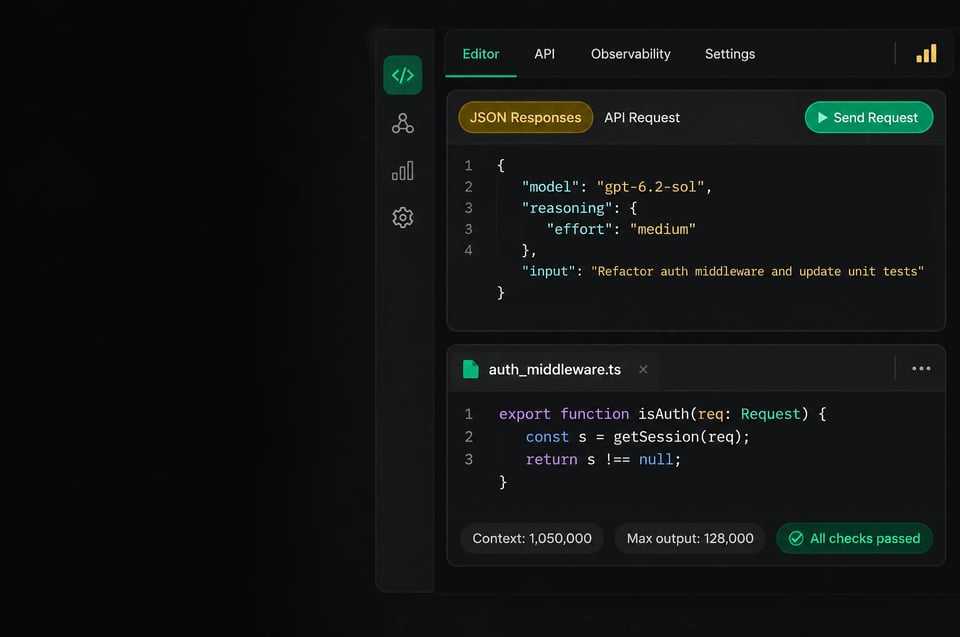
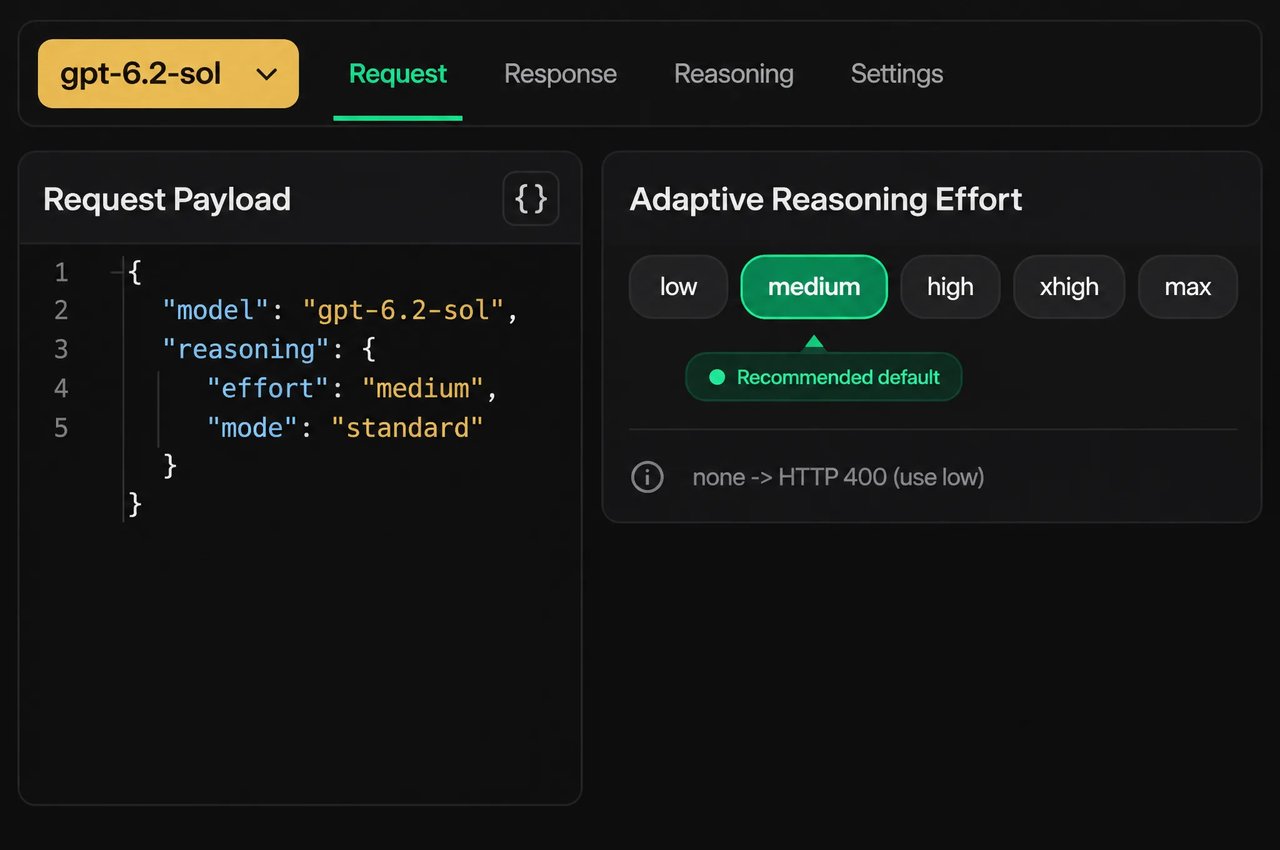
Control reasoning depth with low, medium, high, xhigh or max; setting reasoning effort to none returns HTTP 400. GPT-6.2 Sol reasons adaptively across effort levels and supports standard and pro modes in the OpenAI Responses API.
Preserved Reasoning and Prompt Caching
06

Preserved Reasoning and Prompt Caching

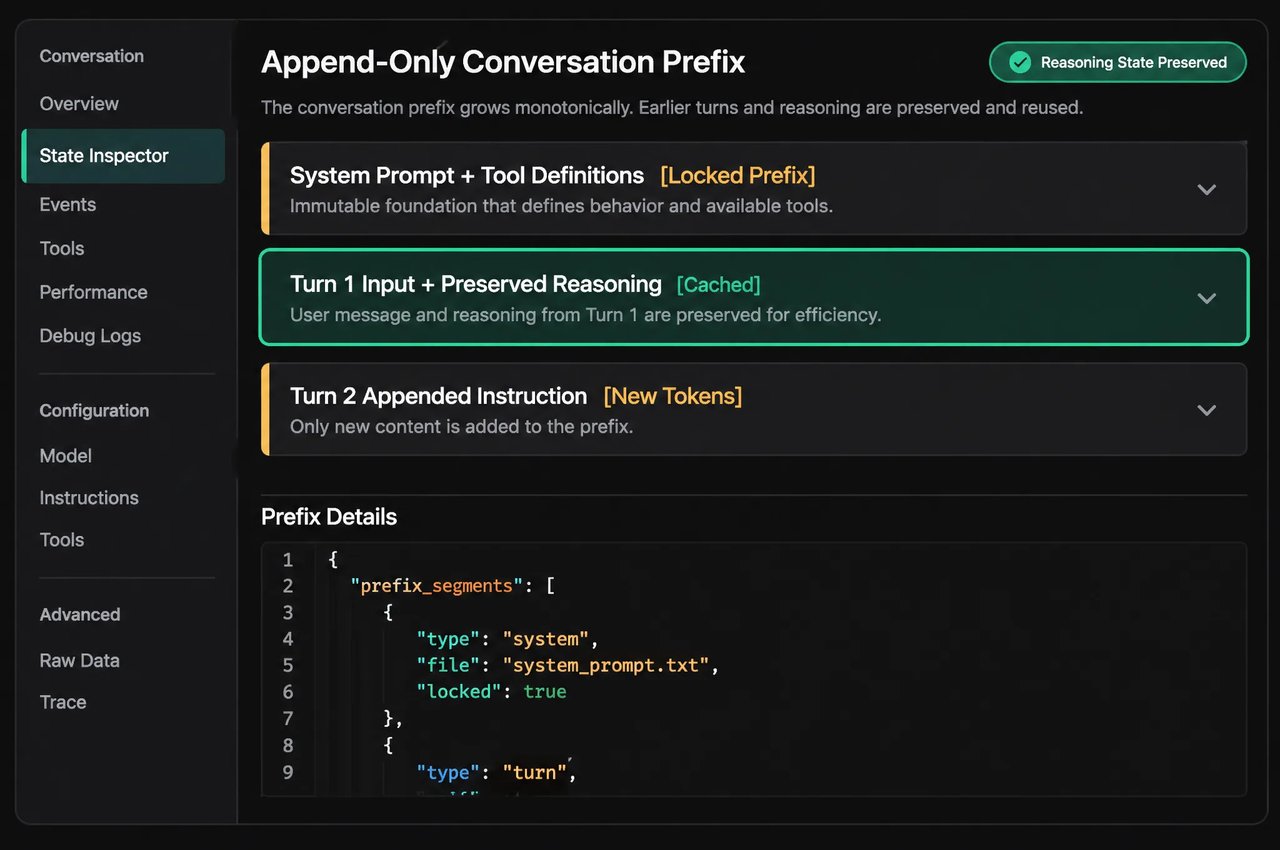
Starting with GPT-6.2, OpenAI's API drops reasoning items when it detects mid-conversation prefix edits, a model downgrade, or a change in the end user or organization. OpenAI recommends keeping prompt prefixes unchanged and appending new instructions to help preserve reasoning across turns and keep earlier input eligible for prompt caching.
SpecificationGPT-6.2 Sol
DeveloperOpenAI
Model ID (OpenAI)gpt-6.2-sol
Release dateNovember 17, 2026
ModalitiesText and image input; text output (audio and video unsupported)
Context window1,050,000 tokens (up to 922,000 input tokens)
Max output tokens128,000 tokens
Reasoning effortlow, medium (recommended starting point), high, xhigh, max; none rejected
Reasoning modesstandard (default), pro (OpenAI Responses API)
Supported featuresStreaming, structured outputs, function calling, web search, file search, image input, prompt caching
Unsupported parameters and featuresParameters: temperature, top_p, logprobs, top_logprobs; features: fine-tuning, predicted outputs
Knowledge cutoffJune 1, 2026
BenchmarkGPT-6.2 Sol ResultWhat It Measures
FrontierCode 2.0 (at max)Within 0.5 points of GPT-6.2 AstraReal codebase changes graded against maintainer merge standards
GDPval v2+5.3 points over GPT-6.1 SolMultistep consulting, finance and design assignments
LifeValOutscores GPT-6 AstraTailored everyday planning and decision tasks
AA-3D1,259 Elo (GPT-6.2 Astra: 1,318 Elo)Blinded human preference on interactive 3D browser builds
System Card cybersecurity targets25.0% of targets solved vs 11.4% for GPT-6.1 SolCybersecurity target evaluation in the GPT-6.2 System Card

How to Work With GPT-6.2 Sol

Four OpenAI API practices for everyday coding, agents and multi-turn chat.
  1. 1

    Step 1: Start With GPT-6.2 Sol, Escalate to Astra When Needed

    OpenAI recommends starting with GPT-6.2 Sol for day-to-day coding, and positions it as its go-to model for everyday work. For your hardest projects, move to GPT-6.2 Astra, OpenAI's frontier model.
  2. 2

    Step 2: Choose Reasoning Effort From Low to Max

    OpenAI recommends starting with medium for a new integration, or switching legacy none and minimal settings to low; setting reasoning effort to none returns HTTP 400. Supported effort levels are low, medium, high, xhigh and max. Omit temperature, top_p, logprobs and top_logprobs from your requests.
  3. 3

    Step 3: Use the Responses API for Tools and Subagents

    GPT-6.2 Sol supports Chat Completions and the Responses API, but tool calling requires the Responses API. Use Responses to combine function calling, web search, structured outputs and subagent delegation.
  4. 4

    Step 4: Keep Prompt Prefixes Unchanged Across Turns

    Starting with GPT-6.2, OpenAI's API drops reasoning items when it detects mid-conversation prefix edits (such as changes to instructions or tool calls), a model downgrade, or a change in the end user or organization. OpenAI recommends keeping prompt prefixes unchanged and appending new instructions to help preserve reasoning across turns and keep earlier input eligible for prompt caching.

What You Can Build With GPT-6.2 Sol

Everyday production workloads for an efficient 1.05M-context reasoning model.

Day-to-Day Coding and Secure Patching

Implement features, review pull requests, write secure code from the start and produce patches that preserve intended behavior across large repositories.

High-Volume Multistep Agents

Build production agents that combine function calling, web search and file search with structured outputs across multi-turn sessions.

Technical and Non-Technical Collaboration

Draft clear, natural documents, analyze screenshots and charts, and handle tailored planning or research workflows.

Interactive Web and 3D Prototypes

Turn written product briefs into interactive web apps and browser-based 3D experiences.

GPT-6.2 Sol on Kie.ai

01

GPT-6.2 Sol API on Kie.ai

Kie.ai is adding GPT-6.2 Sol to its chat models. This page is the reference for the documented capabilities, specifications and benchmarks of the model.
02

Chat Models in the Kie.ai Market

Browse the chat models in the Kie.ai market, including GPT-6.1 Sol, GPT-6 Astra and GPT-6.1 Terra, alongside the GPT-6.2 Astra overview.
03

One Key Across the Kie.ai Market

All models in the Kie.ai market use the same authentication method: an Authorization: Bearer YOUR_API_KEY header with the key from your Kie.ai API Key Management page.
04

One Credit Balance

Your account has one credit balance that all models in the Kie.ai market draw from, and you can check it with the Get Remaining Credits API.

Frequently Asked Questions

What is GPT-6.2 Sol?

GPT-6.2 Sol (gpt-6.2-sol) is OpenAI's efficient, versatile model for everyday coding, writing and multistep agentic workflows, released on November 17, 2026 alongside GPT-6.2 Astra.

How does GPT-6.2 Sol compare with GPT-6.1 Sol and GPT-6.2 Astra?

Compared with GPT-6.1 Sol, OpenAI describes GPT-6.2 Sol as smarter and more efficient, with a 5.3-point improvement on GDPval v2. On FrontierCode 2.0 at max reasoning, it comes within 0.5 points of GPT-6.2 Astra, OpenAI's frontier model for the hardest projects.

What are the context window and token limits of GPT-6.2 Sol?

GPT-6.2 Sol has a 1,050,000-token context window, accepts up to 922,000 input tokens and generates up to 128,000 output tokens. Its knowledge cutoff is June 1, 2026.

Which reasoning effort levels does GPT-6.2 Sol support?

It supports low, medium, high, xhigh and max via reasoning.effort in the Responses API or reasoning_effort in Chat Completions. Setting reasoning effort to none returns HTTP 400; OpenAI recommends medium for new integrations and low when migrating from none or minimal.

Does GPT-6.2 Sol support Chat Completions and tool calling?

GPT-6.2 Sol supports Chat Completions (v1/chat/completions), the Responses API (v1/responses) and Batch (v1/batch) in OpenAI's API, and tool calling requires the Responses API.

Why should prompt prefixes stay unchanged with GPT-6.2 Sol?

Starting with GPT-6.2, OpenAI's API drops reasoning items when it detects mid-conversation prefix edits (such as changes to instructions or tool calls), a model downgrade, or a change in the end user or organization. OpenAI recommends keeping prompt prefixes unchanged and appending new instructions to help preserve reasoning across turns and keep earlier input eligible for prompt caching.

What inputs and sampling parameters are unsupported in GPT-6.2 Sol?

GPT-6.2 Sol accepts text and image inputs and outputs text; audio and video modalities, fine-tuning and predicted outputs are unsupported. Omit temperature, top_p, logprobs and top_logprobs when sending requests.

Is the GPT-6.2 Sol API available on Kie.ai?

Not yet. Kie.ai is adding GPT-6.2 Sol to its chat models. This page covers OpenAI's documented capabilities, parameters and benchmarks for the model.