A text description of the desired output. Maximum length is 2500 characters.
0/2500Click to upload or drag and drop
Supported formats: JPEG, PNG, JPG Maximum file size: 10MB; Maximum files: 1
Reference image. The characters, backgrounds, and other elements in the generated video are based on the reference image. Supports .jpg/.jpeg/.png, max 10MB, size needs to be greater than 300px, aspect ratio 2:5 to 5:2.
Click to upload or drag and drop
Supported formats: MP4, QUICKTIME Maximum file size: 100MB; Maximum files: 1
Reference video. The character actions in the generated video are consistent with the reference video. Supports .mp4/.mov, max 100MB, 3-30 seconds duration depending on character_orientation.
Generate the orientation of the characters in the video. 'image': same orientation as the person in the picture (max 10s video). 'video': consistent with the orientation of the characters in the video (max 30s video).
Output resolution mode. Use 'std' for 720p or 'pro' for 1080p.
Explore different use cases and parameter configurations
README
Complete guide to using kling-2.6/motion-control
Affordable Kling AI 2.6 Motion Control API
Copy actions from reference videos and recreate motion, gestures, and performance behavior consistently across character-based video generation.
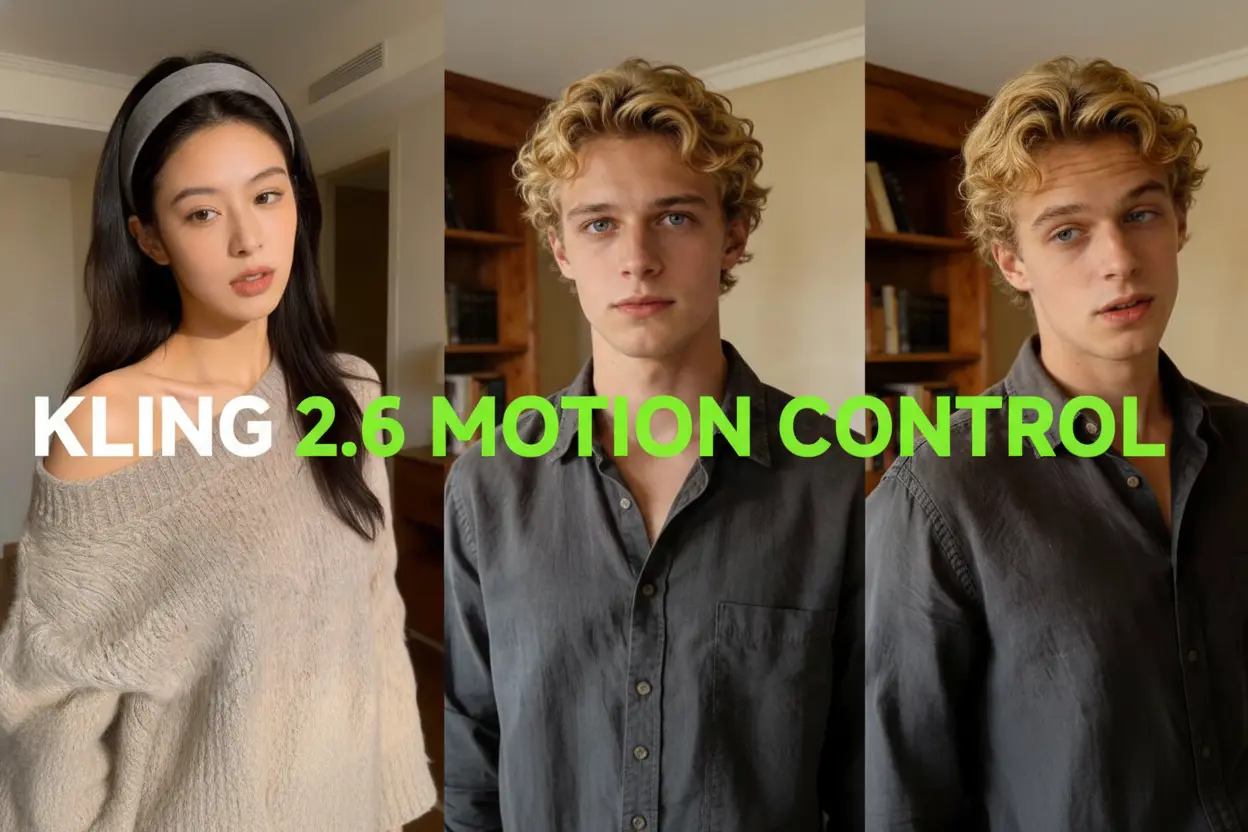
What Is KuaiShou's Kling 2.6 Motion Control ?
Developed by KuaiShou, Kling 2.6 Motion Control is a motion transfer capability that applies real human actions, gestures, and facial expressions from a reference video to a character defined by an image, maintaining consistent timing, emotional expression, and body language in the generated result. This motion control capability is provided as part of the Kling video generation system and focuses on reusing performance directly rather than relying on manual animation workflows. The Kling 2.6 Motion Control API makes this same capability available through a programmatic interface, enabling developers and platforms to access, automate, and scale performance-based image-to-video generation within their own products and production pipelines.
Kling AI 2.6 Motion Control API Generation Modes on Kie.ai
Kling AI 2.6 Motion Control Standard API
The Kling AI 2.6 Motion Control Standard API is designed for efficient video generation with lower credit usage. It delivers consistent motion transfer and reliable character performance, making it suitable for high-volume production such as marketing materials, explainers, educational content, and social media videos, where efficiency and cost control are important.
Kling AI 2.6 Motion Control Pro API
The Kling AI 2.6 Motion Control Pro API prioritizes higher visual quality and more refined rendering, with higher credit consumption. While motion behavior remains unchanged, this mode produces cleaner visuals and stronger overall presentation, making it suitable for professional outputs such as cinematic scenes, virtual presenters, narrative content, and polished brand videos where image quality matters most.
Key Features of Kling AI 2.6 Motion Control API
Perfectly Synchronized Full-Body Motions with Kling 2.6 Motion Control API
The Kling 2.6 Motion Control API enables precise full-body motion transfer from a reference video to a character image, keeping posture, movement rhythm, and body coordination tightly synchronized. By reusing the original performance, the API ensures natural and stable full-body actions even during large movements or dynamic sequences.
Masterful Performance of Complex Motions via Kling AI 2.6 Motion Control API
With the Kling AI 2.6 Motion Control API, complex motions involving multiple body parts are reproduced with consistent structure and flow. Coordinated actions remain stable throughout the sequence, allowing characters to perform intricate movements while preserving realism and performance continuity.
Precision Hand Performances Powered by Kling AI Motion Control API
The Kling AI Motion Control API accurately preserves fine-grained hand and finger movements from the reference video. Subtle gestures such as pointing, grasping, or expressive hand motion are transferred with high fidelity, making this capability especially valuable for presentations, demonstrations, and dialogue-focused content.
30-Second One-Shot Action Support Using Kling Motion Control API
The Kling Motion Control API supports continuous one-shot actions of up to 30 seconds in a single generation. Long-form performances remain coherent from start to finish, enabling uninterrupted character motion for narrative scenes, demonstrations, and sustained action sequences without motion breakdown.
Prompt-Controlled Scene Details with Kling AI 2.6 Motion Control API
While motion and performance are inherited from the reference video, the Kling AI 2.6 Motion Control API allows scene details to be controlled through prompts. Developers can define backgrounds, environments, and contextual elements independently, enabling the same performance to be reused across different visual settings and scenarios.
How to Integrate Kling AI 2.6 Motion Control API into Your Workflow on Kie.ai
Get started with our product in just a few simple steps...
Step 1:Register and Get a Kling AI 2.6 Motion Control API Key
Step 2:Test with Kling AI Motion Control API Playground
Step 3:Integrate Kling Motion Control API
Step 4:Deploy with Kling AI 2.6 Motion Control API
Step 5:Scale Using Kling AI Motion Control API
How to Achieve Better Results with Kling AI Motion Control API
To achieve stable, high-quality results with the Kling AI Motion Control API, it is important to carefully align your image reference and motion reference. Since character movement and orientation are driven entirely by the motion reference, following the guidelines below will help ensure accurate motion transfer and consistent outputs.
Match Body Framing Between Image and Motion Reference
Always keep the character framing consistent between the image reference and the motion reference. A half-body image should be paired with a half-body motion reference, and a full-body image should be paired with a full-body motion reference. Using mismatched framing, such as a full-body motion reference with a half-body image, can lead to unstable motion or incomplete actions.
Use Motion References with Clear, Natural Movement
Choose motion reference videos that feature clear human actions at a moderate speed. Avoid overly fast movements, excessive displacement, or abrupt changes in motion. Steady and continuous actions allow the Kling Motion Control system to extract usable performance more reliably.
Ensure Sufficient Space for Large Motions
For motion references that include large gestures or full-body actions, the image reference should provide enough visual space for the character to move freely. Tight or cropped images can restrict motion range and negatively affect the stability of the generated video.
Follow Image Reference Best Practices
Make sure the character’s entire body and head are clearly visible and not obstructed in the image reference. Keep character proportions consistent with the motion reference and avoid partial occlusion. The Kling AI Motion Control API supports a single primary character per generation, and best results are achieved when that character occupies a clear and dominant portion of the frame. Both realistic and stylized characters are supported, including humans, humanoid animals, and characters with partial humanoid body proportions.
Follow Motion Reference Best Practices
Use motion reference videos that feature a single character whenever possible. If multiple characters appear, the system will use the motion of the character occupying the largest area in the frame. Real human actions are strongly recommended. Avoid camera cuts, rapid camera movement, or frequent zooms, as these interfere with motion extraction. Motion reference duration should be between 3 and 30 seconds, and highly complex or fast-paced actions may result in shorter usable motion segments.
Where Kling 2.6 Motion Control API Fits in Real-World Workflows
Marketing & Brand Spokesperson Videos with Kling AI Motion Control API
The Kling AI Motion Control API allows teams to reuse a single human performance across multiple brand characters or spokespersons. By transferring the same motion and expression to different visual identities, marketers can produce consistent, on-brand videos for campaigns, product launches, and social media without repeated filming or manual animation.
Product Demos and Explainers Using Kling 2.6 Motion Control API
With the Kling 2.6 Motion Control API, presenters’ gestures, hand movements, and pacing are preserved while character appearance and background can be customized. This makes it well suited for product demos, app walkthroughs, and explainer videos where clear gestures and natural presentation flow are essential.
AI Influencers and Virtual Creators Powered by Kling Motion Control API
The Kling Motion Control API enables realistic motion-driven content for AI influencers and virtual creators. Real human performances can be mapped onto virtual personas, maintaining natural body language and expression while allowing creators to scale content production across platforms such as short-form video, livestream clips, and UGC-style media.
Training and Internal Communication with Kling AI 2.6 Motion Control API
For training and educational content, the Kling AI 2.6 Motion Control API helps deliver consistent instruction by reusing instructor performances across different characters, scenes, or languages. Gestures, posture, and expression remain stable, making it suitable for onboarding videos, internal communications, and online learning materials that require clarity and engagement.
Why Choose Kie.ai as Your Platform for Kling AI 2.6 Motion Control API
720p or 1080p Output from One Image and One Motion Video
kling-2.6/motion-control runs on POST /api/v1/jobs/createTask with one reference image and one motion video, and the required mode sets the output resolution; the full parameter list is in the playground and API docs above. Pricing for each resolution is shown in the pricing card above.
Orientation Sets the Maximum Video Length
Character orientation is required. Following the image allows motion videos up to 10 seconds, while following the video allows up to 30 seconds. The output may keep the audio track of the reference video.
Show the Head, Shoulders and Torso
Both the image and the motion video must clearly show the subject's head, shoulders and torso. Files that are not hosted yet can be uploaded first with the Kie.ai File Upload API (Base64, file stream or remote URL). New Kie.ai users receive 80 free credits for testing.