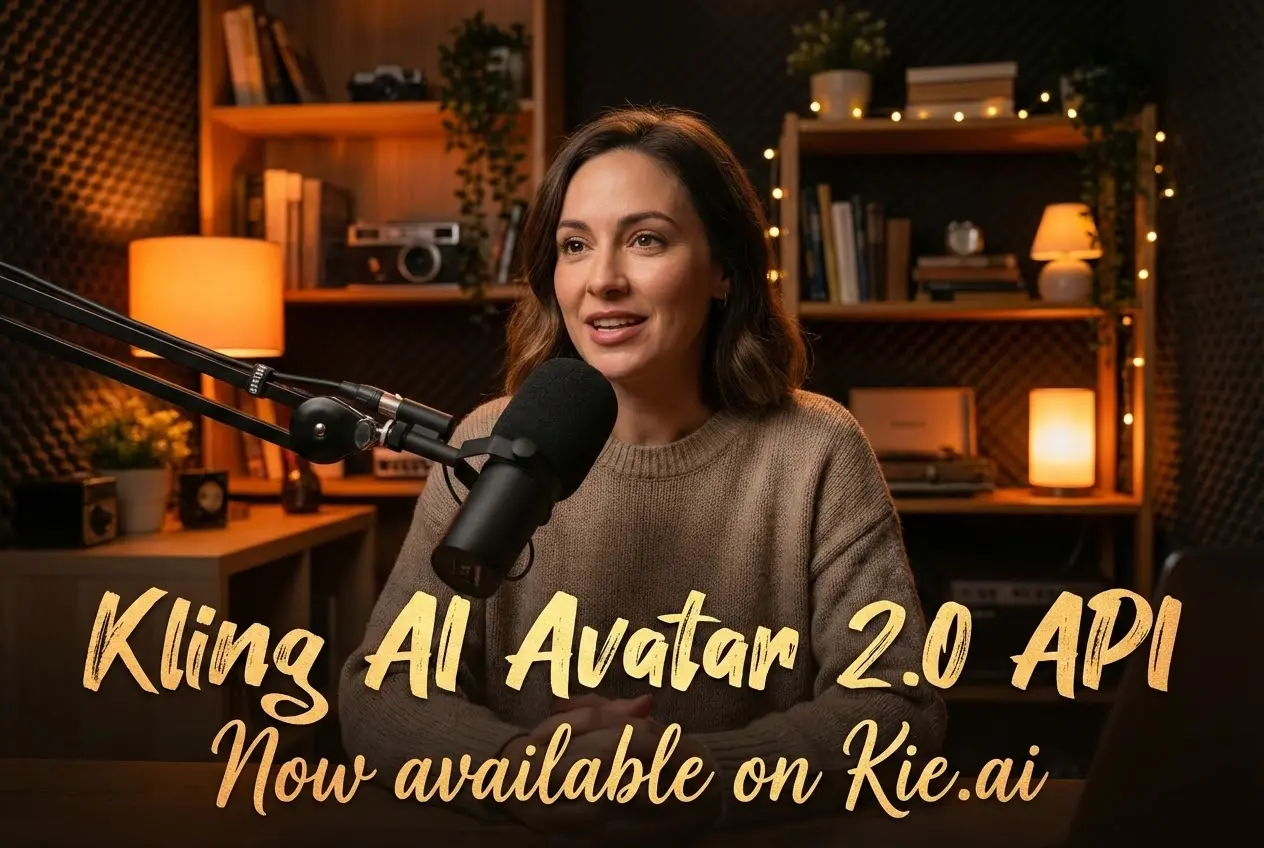
Kling AI Avatar 2.0 is Kuaishou’s audio-driven avatar model that transforms a single image and voice into expressive talking videos, supporting multilingual speech and up to five-minute continuous generation.

Model Type:
Pricing: 8 credits/s (~$0.04) for 720P(Standard), 16 credits/s (~$0.08) for 1080P(Pro), up to 15 seconds per generation. High-tier top-ups (+10% bonus) bring effective pricing down to (~$0.036)/s (Standard) and (~$0.072)/s (Pro).
Input

Click to upload or drag and drop

Supported formats: JPEG, PNG Maximum file size: 10MB

The URL of the image to use as your avatar

Click to upload or drag and drop

Supported formats: MPEG, WAV, X-WAV, AAC, MP4, OGG Maximum file size: 100MB

The URL of the audio file. The duration cannot exceed 5 minutes

The prompt to use for the video generation

0/5000
Output
output typevideo

README

Complete guide to using kling/ai-avatar-pro

Affordable Kling AI Avatar 2.0 API for Long-Form Avatar Creation

Original image

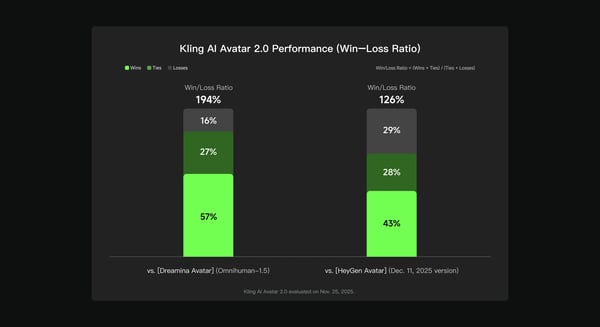
Based on Kling’s internal evaluation dataset, Kling AI Avatar 2.0 demonstrates stronger overall performance than comparable avatar models such as Omnihuman-1.5 (Dreamina) and HeyGen Avatars across multiple evaluation dimensions. The results reflect consistency in motion quality, expression naturalness, lip-sync accuracy, and overall visual realism.In the same evaluation framework, Kling AI Avatar 2.0 achieved an overall GSB score of 194% compared to Omnihuman-1.5 (Dreamina) and 126% compared to HeyGen Avatars, indicating a higher win–loss ratio across test samples. These results position Kling AI Avatar 2.0 among the leading avatar generation systems currently available.

  • 01
  • 02
  • 03
  • 04
  • 05
  • 4.8/ 5
    23,735 ratings
    Tap a star to rate

    Kling AI Avatar 2.0 API is commonly used to create AI presenters for tutorials, onboarding content, internal training, and product explainers. By combining a single portrait with narration audio, teams can generate consistent talking-head videos without filming, making Kling AI Avatar 2.0 API practical for scalable educational and knowledge-based content.

    Marketing teams use Kling Avatar 2.0 API to build branded avatar spokespeople for ads, landing pages, product launches, and social media campaigns. Because Kling Avatar 2.0 API preserves visual identity while adapting to different scripts and languages, brands can maintain consistent character presence across multiple channels and formats.

    Kling AI Avatar V2 API supports stylized illustrations, animated characters, and artistic avatars in addition to realistic portraits. This makes Kling AI Avatar V2 API suitable for storytelling, entertainment content, roleplay experiences, and character-driven videos where expressive performance and personality matter.

    Kling AI Avatar 2.0 API is well suited for multilingual content delivery across global audiences. Teams can use the same avatar to deliver messages in different languages while maintaining consistent appearance and natural lip-sync, making Kling AI Avatar 2.0 API useful for international education platforms, global marketing, and cross-border communication.

    Kie.ai offers affordable Kling AI Avatar 2.0 API pricing designed for both experimentation and large-scale production. The pricing structure is based on real usage rather than rigid feature bundles, allowing teams to control costs while still accessing high-quality avatar generation for real-world applications.

    Kie.ai provides complete Kling Avatar 2.0 API documentation covering setup, authentication, endpoints, workflows, and best practices. This makes it easier for developers to move from testing to production with confidence, reducing integration time and avoiding unnecessary trial and error.

    Deploying the Kling AI Avatar V2 API in real products requires reliable assistance when issues arise. Kie.ai offers 24/7 support to help teams troubleshoot, optimize performance, and maintain stability when running avatar generation at scale.

    Kie.ai uses a flexible credit-based billing model for the Kling AI Avatar 2.0 API, allowing teams to purchase credits based on actual needs. This approach makes it easier to scale usage up or down while keeping spending predictable and avoiding wasted budget on unused capacity.