
Über 20 Image-to-Video-API-Modelle für Multi-Model KI-Video-Generierung

Erstellen Sie mit der Kie.ai AI Image-to-Video-API Bild-zu-Video-Funktionen. Wandeln Sie hochgeladene Bilder in dynamische Videos um, vergleichen Sie über 20 KI-Video-Modelle und integrieren Sie das richtige Modell in Ihre Anwendung – mit flexiblen Preisen, klaren Dokumentationen und zuverlässigem API-Zugriff.

Hauptfunktionen der Image-to-Video-API

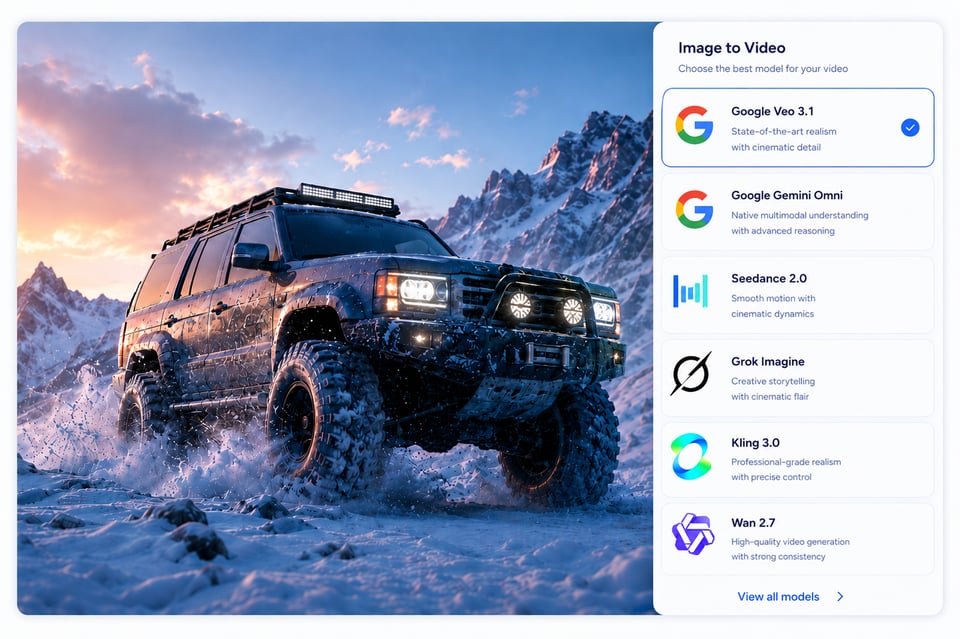
20+ Bild-zu-Video-API-Modelle für Multi-Modell-Generierung

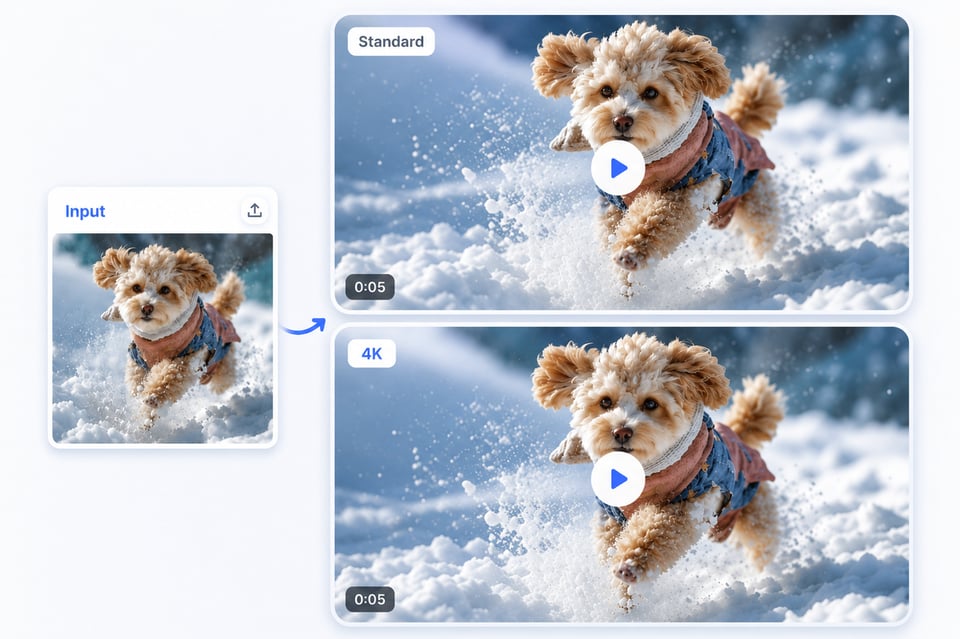
Natürliche Bewegung durch hochwertige Bild-zu-Video-API

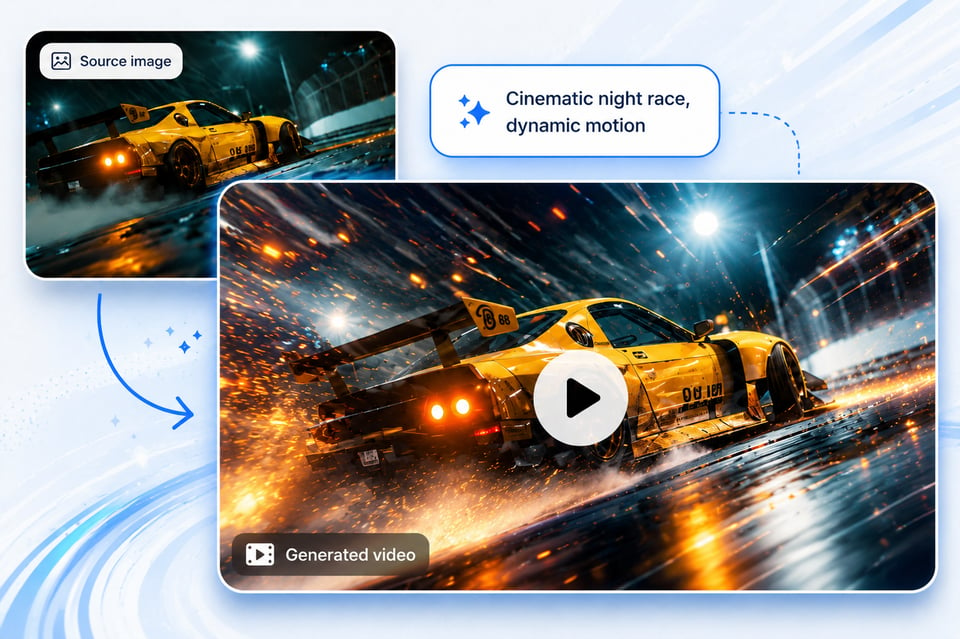
Prompt-basierte AI-Image-to-Video-API zur gezielten Bewegung

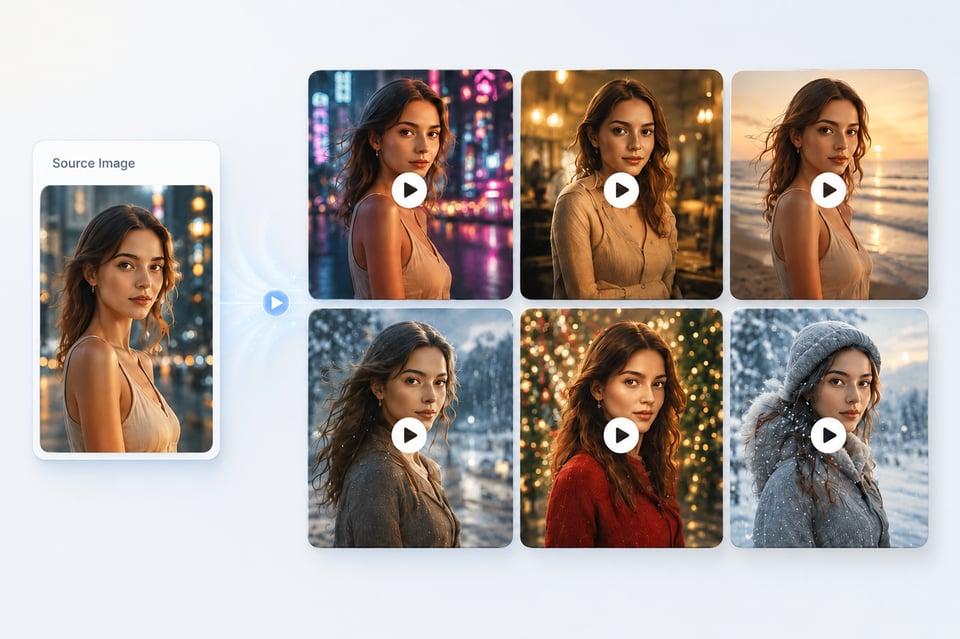
Image-to-Video-API mit Subjekt-Konsistenz und visueller Qualität

Wan AI Video Models API

Hailuo AI Video Models API

So integrieren Sie die Image-to-Video-API auf Kie.ai

Schritt 1: Testen Sie die Image-to-Video-API kostenlos im Kie.ai Playground

Schritt 1: Testen Sie die Image-to-Video-API kostenlos im Kie.ai Playground

AI-Image-to-Video-API-Modelle vergleichen

AI-Image-to-Video-API-Modelle vergleichen

Schritt 3: Erhalten Sie Ihren API-Schlüssel und beginnen Sie mit der Integration

Schritt 3: Erhalten Sie Ihren API-Schlüssel und beginnen Sie mit der Integration

Image to Video API with Subject Consistency and Visual Preservation

Image to Video API with Subject Consistency and Visual Preservation

Was lässt sich mit der Image-to-Video-API erstellen?

Produkt-Videos aus Bildern

Bewegte Portrait-Videos aus Selfies oder Profilbildern

Tier-Videos aus Tierfotos

Was macht Kie.ai zu einer praktischen Lösung für Image-to-Video-APIs?

Wirtschaftliche Preise für die Image-to-Video-API

Umfassende API-Dokumentation für Image-to-Video

Rund-um-die-Uhr Image-to-Video-API-Dienst

20+ AI Image-to-Video-APIs auf einer Plattform

Sichere Datenverarbeitung für Image-to-Video-APIs

Schnelle Updates der AI-Video-Modell-APIs

What Makes Kie.ai a Practical Image to Video API Choice

Affordable Image to Video API Pricing

Complete Image to Video API Documentation

24/7 Image to Video API Service

20+ AI Image to Video APIs in One Platform

Secure Image to Video API Data Handling

Fast AI Video Model APIs Updates

FAQs Image to Video API

1

What is Image to Video API used for?

Image to Video API is used to turn a still image into a generated video through an API request. Developers can use it to build product showcase videos, portrait motion clips, character animation, social media effects, cinematic scene generation, avatar videos, and other image-based video features inside their own apps or platforms.

2

Does Kie.ai provide 20+ AI Image to Video APIs?

Yes. Kie.ai provides access to 20+ AI Image to Video APIs across multiple AI video model brands, including Google, Kling, ByteDance Seedance, Wan, Hailuo, Runway, Grok Imagine, and more. This allows developers to test different models and choose the right API based on motion quality, speed, cost, visual style, and feature support.

3

Which Image to Video API model should I choose?

The right model depends on the type of video you want to generate. Cinematic scene videos may need a model with stronger camera movement and realism, while portrait animation may need better subject consistency. Product showcase videos may require stable object preservation, and social effect videos may prioritize speed and expressive motion. Kie.ai lets developers compare different Image to Video API models before integration.

4

Can I test Image to Video API free before integrating it?

Yes. Developers can test Image to Video API models on Kie.ai with free credits before integration. You can upload an image, write a motion prompt, compare model outputs, review pricing, and evaluate whether the selected model fits your product workflow before connecting it through API.

5

What inputs does an AI Image to Video API usually require?

An AI Image to Video API usually requires an image input and a text prompt. The image provides the visual reference, while the prompt describes the motion, camera movement, subject action, mood, or scene behavior. Depending on the selected model, additional parameters may include duration, aspect ratio, resolution, generation mode, or other model-specific settings.

6

Can Image to Video API keep the original image recognizable?

A good Image to Video API should preserve the main subject, composition, and important visual details while adding motion. For portraits, this may include facial identity, hairstyle, and body structure. For products, this may include shape, color, material, and branding details. The final level of consistency depends on the selected model, image quality, prompt design, and generation settings.

7

Is Kie.ai Image to Video API suitable for product integration?

Yes. Kie.ai Image to Video API is suitable for product integration because it combines multi-model access, affordable Image to Video API pricing, API documentation, 24/7 service availability, secure data handling, and regular model updates. This makes it practical for apps, SaaS tools, creator platforms, ecommerce systems, marketing workflows, and automated video generation features.