
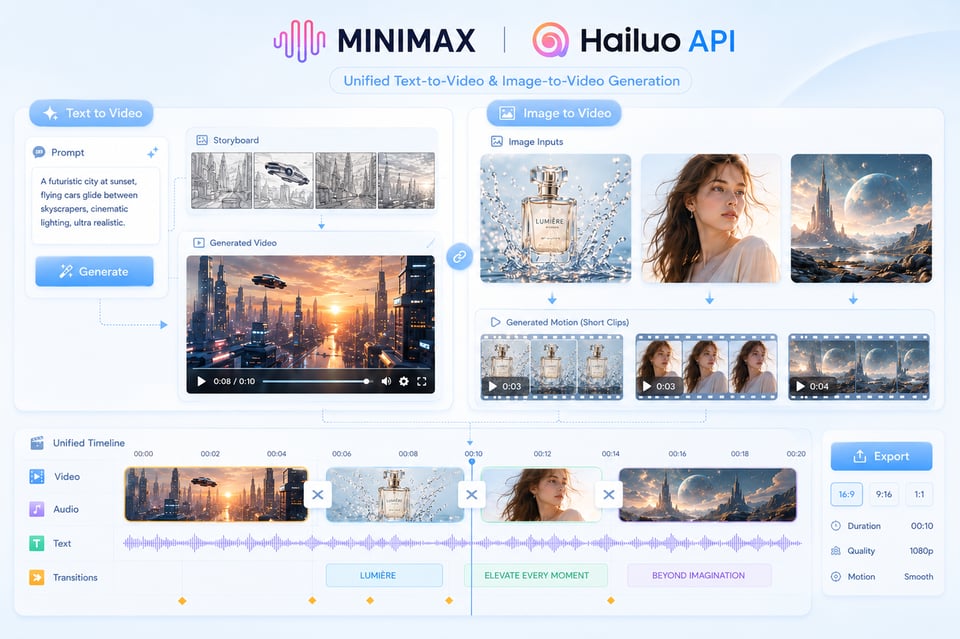
海洛MiniMax API 支持文本到视频和图像到视频生成,为各类创意任务提供灵活的创作起点。提示词可定义场景逻辑、主体行为、镜头语言、光影氛围与视觉风格,而图像输入则能保留原有主体、构图或艺术方向,并将其扩展为动态内容。这使得海洛API既可用于构建原创场景,也可用于为产品图、人物肖像、概念艺术及营销视觉等现有素材添加动画效果。
Image to VideoText to VideoVideo to Video
Seedance2.5
Seedance 2.5 on KIE is ByteDance’s upgraded AI video model, built for longer, more controllable video generation. It supports up to 30-second videos, multimodal references, precise editing, and improved consistency for more cinematic and production-ready creative workflows.
Text to Video
Wan 3.0
Wan3.0 is Alibaba’s next-generation all-in-one video generation model built for multimodal creation. It supports text, image, video, audio, and structured references to produce more consistent, realistic, and controllable video content with enhanced storytelling and editing capabilities.
Image to VideoText to VideoVideo to Video
Seedance 2
Seedance 2.0 on KIE is a multimodal Al video model by ByteDance, optimized for fast and realistic video generation. It supports high-quality virtual human video creation with strong multi-shot consistency, enabling more lifelike and cinematic outputs across scenes.
Text to ImageImage to Image
GPT Image 2
GPT Image 2 is OpenAI’s next-gen image model built for stronger photorealism, cleaner image editing, sharper text rendering, and more polished product photography. Designed for more advanced visual workflows, it pushes image generation beyond basic text-to-image output and into higher-quality creative, commercial, and design-ready use cases.
Text to ImageImage to Image
Nano Banana 2
Meet Nano Banana 2, Google’s Gemini 3.1 Flash Image model, now available via Kie AI API. Built for developers, it combines lightning-fast speed with Pro-level quality, accurate text rendering, strong character consistency, and scalable image generation and editing workflows.
Chat
Grok 4.6
Grok 4.6 is xAI’s latest frontier AI model, designed to enhance long-running agents, advanced reasoning, coding intelligence, and interactive AI experiences. Building on Grok 4.5, it delivers improved performance for complex multi-step tasks, knowledge work, software engineering, and creative applications.
所有模型
3 找到的相关模型3 MODELS
提供商(1/25)
任务(15)
Hailuo
Hailuo
MiniMax H3 (Hailuo-03)
Text to VideoImage to Video
Hailuo
Hailuo
Hailuo 2.3
starting from
$0.15-20%
30 Credits/6s
Text to VideoImage to Video
Hailuo
Hailuo 2.3
Hailuo 2.3 is MiniMax’s high-fidelity AI video generation model designed to create realistic motion, expressive characters, and cinematic visuals. It supports both text-to-video and image-to-video, handling complex movements, lighting changes, and detailed facial expressions with stability and consistency.
多种 Hailuo API 模型用于动态 AI 视频生成
在 Kie.ai 上使用 MiniMax Hailuo 02 和 Hailuo 2.3,将提示词与图像转化为具有自然动作、电影风格和灵活创意控制的动态短视频。
海洛AI API 在AI视频创作中的主要特性
围绕海洛02 API 构建的运动一致性技术
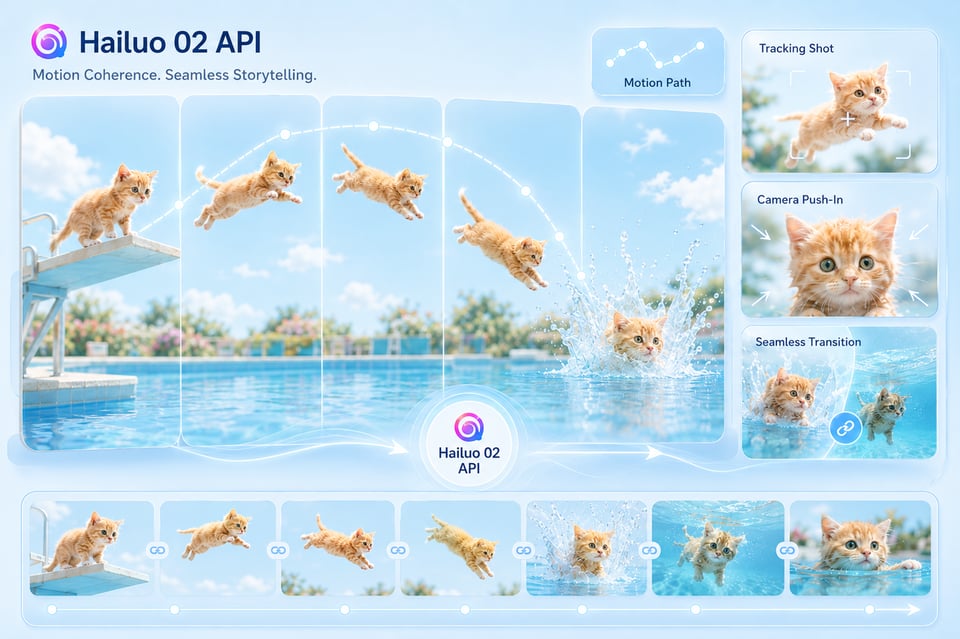
海洛02 API 特别适用于需要突出视觉冲击力的视频创作。它能处理主体动作、物体行为、镜头驱动的转场,以及节奏感和方向感更强的短视频场景。不同于仅对静态图像添加轻微动画的工具,海洛02 能让生成的动态内容更贴近主体、环境与整体场景的流动感,使画面更具连贯性和真实感。
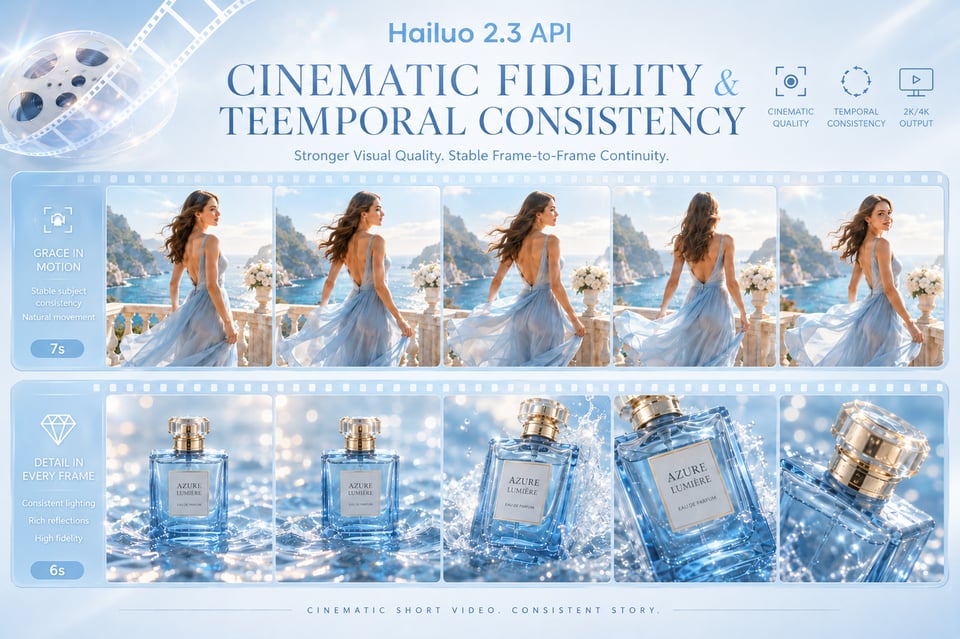
海洛2.3 API 的电影级画质与时间一致性表现
海洛2.3 API 专为需要更高视觉质量与更流畅帧间过渡的视频设计。它能够呈现更丰富的光影效果、更自然的场景动态、更精细的角色表现,以及更佳的时间连贯性。这使其非常适合用于电影化叙事、产品宣传片、时尚视觉、品牌活动影像等对氛围、真实感和连续性要求较高的短视频创作。
如何在Kie.ai平台上部署海洛API实现视频生成
步骤一:在 Kie.ai 上获取您的API密钥
请在 Kie.ai 注册账号并从控制台生成您的API密钥。该密钥用于验证您的API请求,并将您的应用程序连接到可用的MiniMax海洛API模型。在构建生产流程前,请查阅最新的 Kie.ai API 文档,了解当前模型名称、请求参数、支持输入格式、分辨率选项、时长限制、定价信息及回调设置等内容。
步骤二:使用文本或图像输入测试海洛AI API
您可以使用 Kie.ai 的测试环境或API测试平台,对比海洛02与海洛2.3在不同视频任务中的表现。您可以从文本提示开始进行文字转视频生成,也可以提供图像输入以实现图像转视频动画效果。在此阶段,请优化场景描述、主体动作、镜头语言、视觉风格、宽高比、时长和分辨率等参数,确保输出效果明确可控,便于后续集成。
步骤3:创建视频任务并获取结果
调用海洛API生成视频,包括所选模型、提示词、图像URL(若需要)及其他必要参数。任务创建后,可使用返回的任务ID查询生成状态,或设置回调地址,视频生成完成后可自动接收结果。任务完成后,API将返回生成视频的URL,可用于预览、下载、保存或接入您的产品流程。
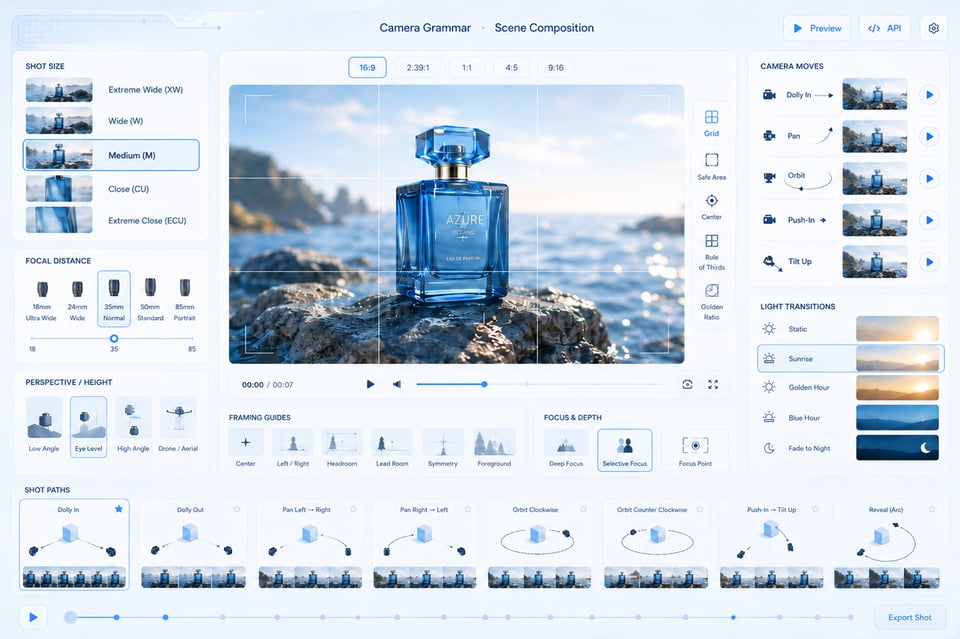
Camera Grammar and Scene Composition with Hailuo AI Video API
Hailuo AI Video API can interpret camera and scene instructions in a more structured way, helping users guide not only what appears in the frame, but how the shot unfolds. Prompts can describe camera movement, focal distance, subject framing, perspective shifts, lighting transitions, and pacing, so the final clip feels closer to a composed video sequence rather than a random motion effect. This is useful for product reveals, character close-ups, dynamic scene openings, and cinematic social clips.
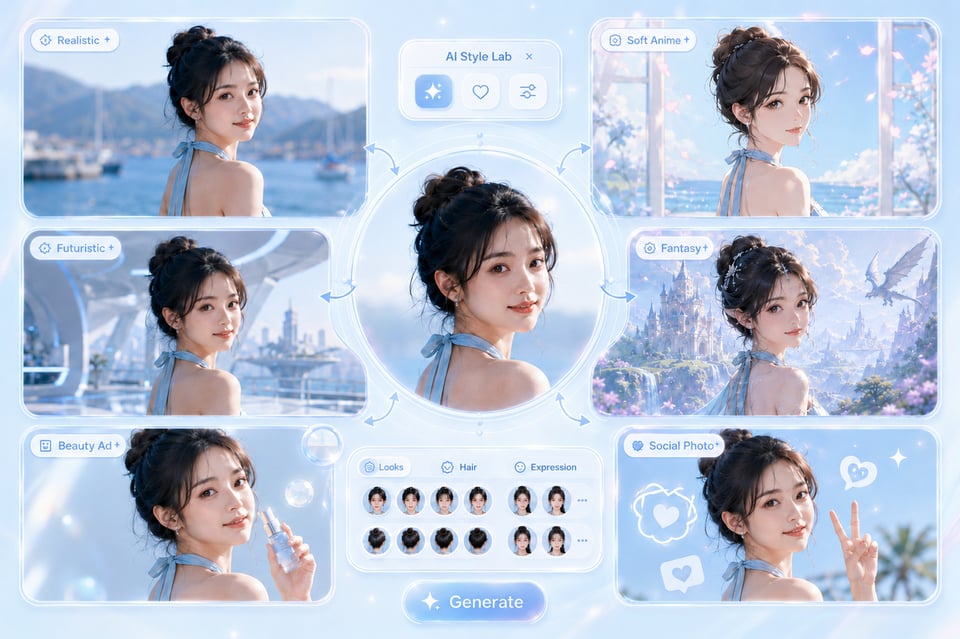
Style Fidelity and Subject Preservation Across Hailuo AI API Outputs
Hailuo AI API can work across realistic footage, anime-inspired visuals, CGI-style scenes, fantasy worlds, commercial product shots, and stylized social content while keeping the output visually coherent. The key value is not only style variety, but also subject preservation, composition stability, and motion consistency across frames. This helps reduce the drifting details, unstable identities, and broken visual continuity that often weaken AI-generated video.
使用 MiniMax 海洛 API 创作更具观赏性的 AI 视频内容
01
爆款动物动作短视频
海洛02 API适用于趣味短视频制作,例如动物做出出人意料的动作——如猫咪从高台跃下、狗狗在雪地滑行、小动物穿越戏剧性体育风格场景等。这类内容适合短视频平台,因为其创意一目了然,动作是核心亮点,几秒钟内就能带来幽默、惊喜和强烈的视觉冲击。
02
基于MiniMax海洛API的图像转视频角色精彩瞬间
海洛AI视频API可将人物肖像、头像、时尚大片或插画形象转化为富有表现力的短片场景。不仅支持基础动作,还能通过添加手势、面部表情、镜头运动、光影变化和环境氛围等元素,使画面更具表现力。适用于创作者头像、虚构角色、动漫风格瞬间、短视频剧情片段及适合快节奏信息流展示的视觉叙事内容。
03
海洛AI视频API生成具有电影质感的产品发布视频
海洛AI视频API可生成聚焦产品的短视频片段,其价值在于镜头语言而非静态产品图。通过提示词可实现推进镜头、旋转展示、微距特写、液体飞溅、光影过渡或高端商业布景等效果,让产品视觉更具宣传片或广告创意的质感。特别适用于需要从静态素材转化为吸引用户停留的视频内容。
如何通过海洛API提示词获得更好的视频输出
围绕一个明确的视觉动作设计画面
一个高质量的海洛 API 视频通常始于一个清晰的动作。与其要求多个事件同时发生,不如将镜头聚焦于单一可识别的运动,例如人物转身、猫咪跃入水中、产品在专业灯光下的旋转,或镜头缓缓推入电影场景。这能让模型拥有更清晰的运动目标,使最终视频更具意图感与表现力。
使用海洛02 API 创作以动作为核心的视频创意
海洛02 API 更适用于以动作为主要看点的视频内容。适合用于动物动作片段、运动风格场景、趣味性肢体动作、物体动画、角色动作或社交短视频等,要求观众能迅速理解动作内容。提示词需清晰描述主体、动作和环境,使模型基于可见动作生成视频,而非模糊的氛围。
选择海洛2.3 API,打造更具电影质感的场景
当视频对氛围有较高要求时,海洛2.3 API 表现更佳,尤其适用于依赖真实感、光影、角色细节和视觉连贯性的场景。它特别适合戏剧肖像、幻想场景、产品展示、时尚视觉、短篇故事片段以及需要更精致电影质感的视频内容。使用海洛2.3时,请在提示词中加入氛围或情绪、镜头语言、光线和场景构图,而不仅仅是主体描述。
图像转视频的提示词应贴近原图
使用MiniMax海洛API进行图像转视频生成时,让图像决定主体、构图、服装、产品形态或艺术方向。提示词应主要描述图像如何动态变化,例如缓慢推近、头发与布料运动、面部表情变化、背景氛围、镜头切换或产品旋转等。若提示与图像差异过大,可能导致视频失去辨识度、结构或视觉一致性。
为什么选择Kie.ai来部署海洛API
一个平台整合多个海洛AI模型
海洛API定价灵活,支持测试与规模化应用
海洛AI API 完整文档,加速部署
海洛AI视频API 7×24小时服务支持
Add Camera Language to Make the Clip Feel Directed
Why Choose Kie.ai to Deploy Hailuo API
Multiple MiniMax Hailuo API Models in One Platform
Kie.ai brings Hailuo 02 API and Hailuo 2.3 API together in one platform, making it easier to choose the right model for different video generation needs. Users can work with motion-led clips, image-to-video animation, cinematic scenes, and higher-fidelity outputs without switching between separate tools or managing different model setups.
Affordable Hailuo API Pricing for Testing and Scale
Kie.ai offers a flexible way to use Hailuo API across early testing, creative iteration, and larger generation needs. Teams can compare outputs across Hailuo models, control usage based on project volume, and scale video generation without a heavy upfront commitment.
Complete Hailuo AI API Documentation for Faster Deployment
Kie.ai provides clear Hailuo AI API documentation to support model selection, input setup, request structure, task creation, result retrieval, callback usage, and integration details. Since model availability, parameters, duration options, resolutions, and pricing may change over time, users should always check the latest documentation before deployment.
24/7 Hailuo AI Video API Service and Support
Kie.ai provides 24/7 Hailuo AI Video API service support for users running video generation in real products, creative tools, automation systems, or content platforms. Continuous support helps with API usage, task tracking, callback handling, generation issues, and other production questions that may appear after deployment.
Frequently Asked Questions About Hailuo API
1
What is Hailuo API?
Hailuo API is an AI video generation API based on MiniMax Hailuo models. It can be used to create short videos from text prompts or image inputs, making it suitable for text-to-video generation, image-to-video animation, motion-heavy clips, cinematic scenes, product visuals, character moments, and other AI video creation tasks.
2
Does Kie.ai support MiniMax Hailuo API?
Yes. Kie.ai supports MiniMax Hailuo API models, including Hailuo 02 API and Hailuo 2.3 API. Users can test different Hailuo models, compare video results, and deploy Hailuo API for AI video generation through Kie.ai. Available models and parameters may change over time, so always refer to the latest Kie.ai API documentation before integration.
3
What is the difference between Hailuo 02 API and Hailuo 2.3 API?
Hailuo 02 API is better suited for motion-focused short videos where visible action is the main highlight, such as animal movement, character actions, product motion, or dynamic social clips. Hailuo 2.3 API is designed for higher-fidelity video generation, with stronger cinematic quality, smoother scene continuity, richer visual atmosphere, and more refined character presentation.
4
Can Hailuo AI API generate videos from both text and images?
Yes. Hailuo AI API can support both text-to-video and image-to-video generation, depending on the selected model and supported parameters. Text prompts can describe the subject, action, scene, style, lighting, and camera direction, while image inputs can be used to animate product photos, portraits, concept art, campaign visuals, or other existing creative assets.
5
What types of videos can I create with Hailuo API?
Hailuo API can be used for cinematic short clips, animal action videos, character scenes, image-to-video animations, product reveals, fantasy visuals, social media hooks, stylized transformations, and branded creative assets. It works especially well when the video needs clear motion, strong visual atmosphere, or a short-form format that can quickly capture attention.
6
Is Hailuo API suitable for production video generation?
Yes. Hailuo API can be used for both testing and production-oriented video generation. On Kie.ai, users can deploy Hailuo API for video tools, content platforms, creative automation systems, and other AI video products. For production use, check the latest documentation for model availability, supported inputs, resolution options, duration limits, pricing, task status tracking, callback behavior, and response format.
7
How do I start using Hailuo API on Kie.ai?
Yes. Hailuo API can be used for both testing and production-oriented video generation. On Kie.ai, users can deploy Hailuo API for video tools, content platforms, creative automation systems, and other AI video products. For production use, check the latest documentation for model availability, supported inputs, resolution options, duration limits, pricing, task status tracking, callback behavior, and response format.